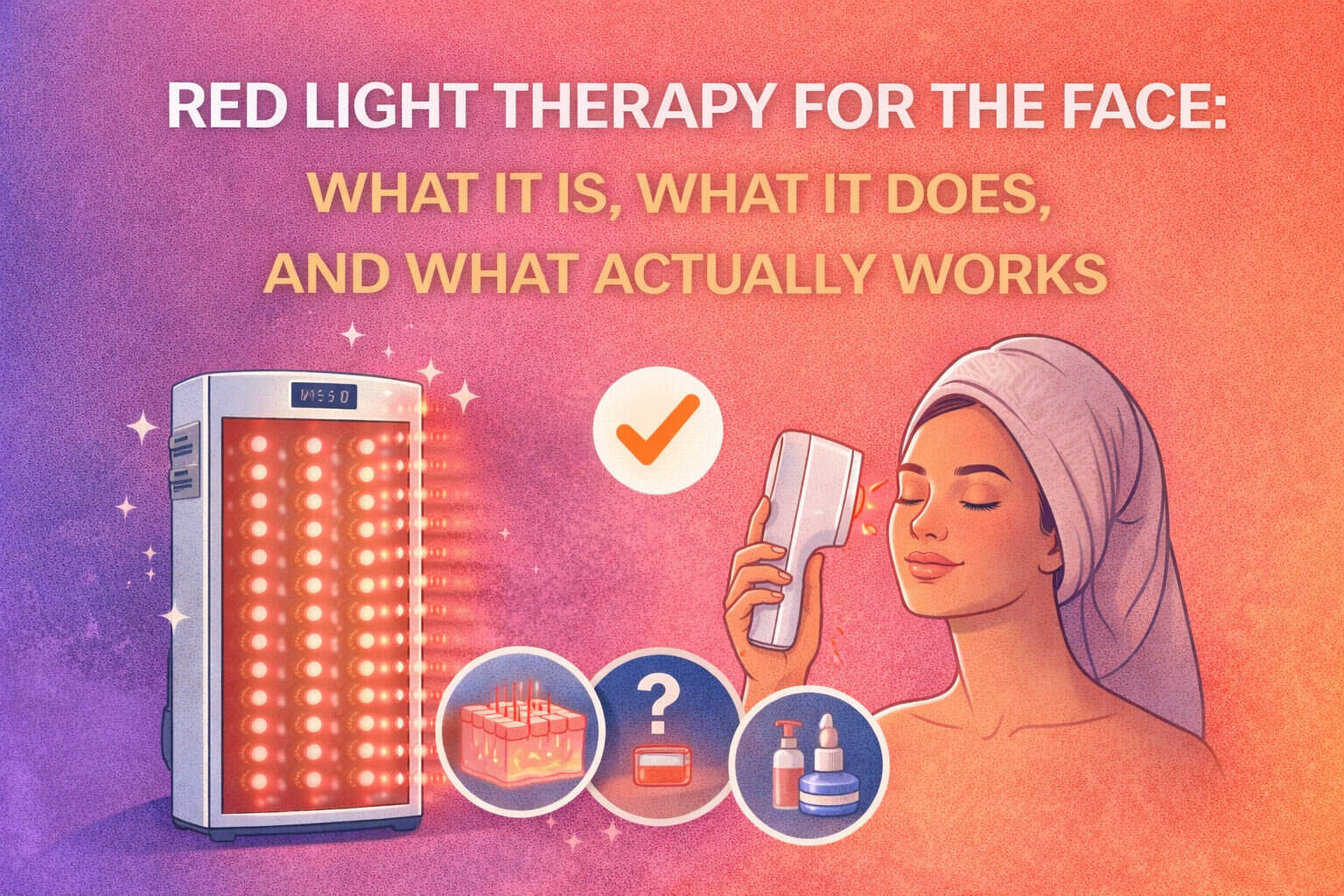
Red light therapy for the face has become increasingly popular for improving skin appearance, supporting collagen production, and reducing visible inflammation. While many consumer devices promise dramatic results, not all systems are created equal — and not all claims are supported by clinical evidence.
This guide explains how facial red light therapy works, what benefits are supported by research, and what to look for when evaluating devices for clinical or personal use.
What Is Red Light Therapy for the Face?
Red light therapy for the face uses low-level wavelengths of red or near-infrared light (typically between 630 nm and 850 nm) to stimulate cellular activity in the skin.
Unlike ultraviolet (UV) light, red light is non-ionizing and does not damage DNA. Instead, it is absorbed by mitochondria within skin cells and influences cellular energy production and signaling.
Facial red light therapy is commonly used to:
- Support collagen and elastin production
- Improve skin tone and texture
- Reduce visible redness and inflammation
- Support healing after dermatologic or aesthetic procedures
How Facial Red Light Therapy Works
Red and near-infrared light penetrate the skin and are absorbed by chromophores within the mitochondria, particularly cytochrome c oxidase. This interaction can increase ATP production and modulate oxidative stress.
This cellular response is why red light therapy is used in:
- Dermatology
- Wound and tissue healing
- Inflammatory skin conditions
- Post-procedure recovery
For facial applications, this translates into gradual improvements in skin quality rather than immediate cosmetic change.
Benefits of Red Light Therapy for Facial Skin
Based on current evidence, potential benefits include:
- Improvement in the appearance of fine lines and wrinkles
- Increased collagen density over time
- Reduced redness and inflammation
- Faster recovery after cosmetic treatments
- Improved overall tone and texture of the skin
Results depend on wavelength, dose, consistency, and device quality.
Clinical-Grade vs Consumer Red Light Devices
Not all facial red light therapy devices are equal.
Consumer Devices
- Lower power output
- Limited treatment area
- Often inconsistent wavelengths
- Subtle results over long periods
Clinical-Grade Systems
- Precisely controlled wavelengths (630 nm, 660 nm, 810 nm, 830 nm)
- Higher output and uniform coverage
- Designed for repeatable, consistent dosing
- Used in dermatology and aesthetic practices
Is Red Light Therapy Safe for the Face?
Red light therapy is generally considered safe when used properly.
However:
- Eye protection should be used
- Overuse can cause temporary redness or irritation
- Devices should meet safety and electrical standards
- Users on photosensitizing medications should consult a healthcare provider
How Often Should Red Light Therapy Be Used on the Face?
Typical protocols range from:
- 2–5 sessions per week
- 5–20 minutes per session depending on output and distance
- Dosing based on device type and clinical guidance
Consistency matters more than intensity.
Who Is Facial Red Light Therapy Best For?
Facial red light therapy may be appropriate for:
- Individuals seeking gradual skin quality improvement
- Patients recovering from dermatologic or cosmetic procedures
- Clinics offering non-invasive aesthetic treatments
- People managing inflammatory skin conditions under guidance
It is not a medical treatment for disease and should not replace professional care.
Final Thoughts
Facial red light therapy can be a useful, low-risk tool for improving skin appearance and supporting tissue recovery when applied correctly with appropriate devices.
Understanding realistic outcomes and proper use is essential to avoid misinformation and disappointment.
If you are evaluating red light therapy systems for professional or clinical use, working with an experienced equipment supplier can help ensure safety, reliability, and effectiveness.
Additional Resources & References
Cleveland Clinic — Red Light Therapy: Benefits & Uses
https://my.clevelandclinic.org/health/articles/22114-red-light-therapy
A clinical overview of red light therapy’s benefits, limitations, and how it’s used to support skin health and other conditions.
American Academy of Dermatology — Red Light Therapy for Skin
https://www.aad.org/public/cosmetic/safety/red-light-therapy
Expert guidance on what red light therapy is, how it works, and considerations for safety and effectiveness from a leading dermatology authority.
FDA Draft Guidance on Photobiomodulation (PBM) Devices
https://www.fda.gov/regulatory-information/search-fda-guidance-documents/photobiomodulation-pbm-devices-premarket-notification-510k-submissions
U.S. Food and Drug Administration draft guidance on regulatory considerations for low-level light therapy devices such as red light therapy systems.
Brown Health — Red Light Therapy Safety & Things to Know
https://www.brownhealth.org/be-well/red-light-therapy-benefits-safety-and-things-know
Educational health resource discussing red light therapy benefits, safety considerations, and how it may support skin healing and collagen production.
WebMD — Red Light Therapy: Effectiveness, Treatment, and Risks
https://www.webmd.com/skin-problems-and-treatments/red-light-therapy
A consumer health overview of LED and red light therapy, how it’s applied, and what users should understand about its uses and limitations.