Histology embedding centers play a crucial role in tissue processing. They are the hub where tissue samples are prepared for microscopic examination. The process of tissue embedding is intricate. It requires precision and expertise to ensure accurate diagnosis and research outcomes.
However, histology embedding centers face numerous challenges. These range from tissue orientation difficulties to equipment malfunctions.
This article aims to shed light on these common challenges. It also provides answers to frequently asked questions about tissue embedding and processing.
Whether you’re a histotechnologist, pathologist, or a student in the field, this guide will offer valuable insights. It will help you understand the intricacies of histology embedding centers and how to overcome typical problems.
So, let’s delve into the world of histology embedding centers and explore their significance, challenges, and future trends.
Understanding Histology Embedding Centers
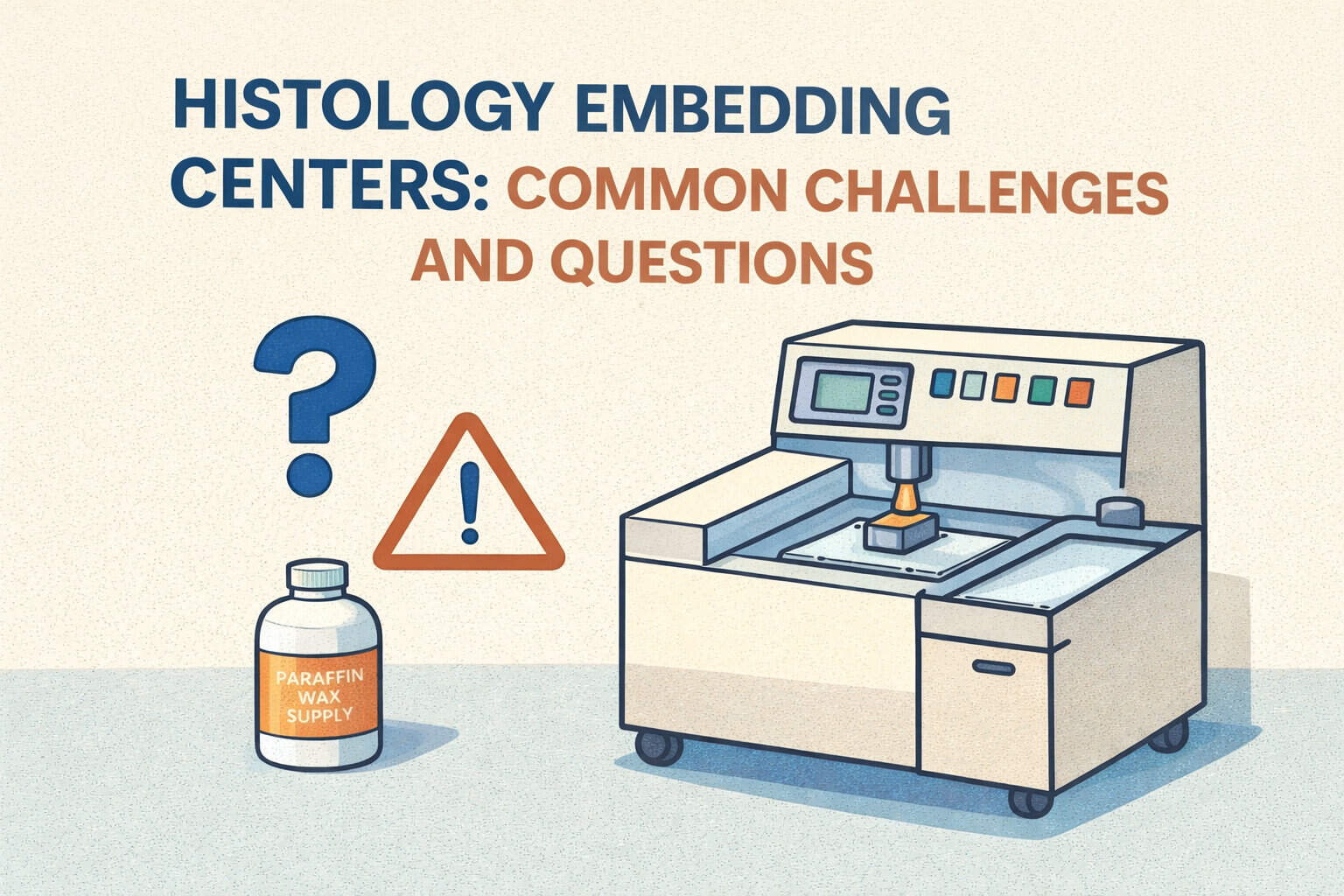
Histology embedding centers are essential components of histopathology labs. They ensure tissues are adequately prepared for examination. Their main role is to solidify biological tissues in a medium, like paraffin wax, for sectioning.
Embedding centers enable pathologists to obtain accurate tissue slices. Proper embedding is vital for correct diagnosis and research outcomes. Without it, crucial cellular details may be missed.
In tissue processing, embedding is a critical step. It follows fixation and dehydration, securing tissue samples for further analysis. This step ensures samples are evenly sectioned for microscopic evaluation.
The embedding process begins with choosing the right medium. The medium must support the tissue structure and facilitate easy sectioning. Paraffin wax is popular, but alternatives are available for specific needs.
To summarize, histology embedding centers serve an indispensable role in tissue processing. Their operations significantly impact the quality of diagnosis and research findings. Thus, understanding the embedding process ensures precise and reliable histopathological analysis.
Common Challenges in Tissue Embedding
Tissue embedding presents various challenges that can impact the quality of histological slides. A frequent issue is the correct orientation of tissue samples. Improper alignment during embedding can lead to missed structures in subsequent sections.
Selecting the appropriate embedding medium is another challenge. Each medium affects tissue properties differently. Pathologists often prefer paraffin wax, but other choices exist for special applications. The key is to match the medium with the tissue type and purpose of the analysis.
Maintaining precise temperature control during embedding is crucial. Inconsistent temperatures can cause improper infiltration of the embedding medium. This inconsistency leads to compromised specimen integrity and affects sectioning.
Equipment malfunctions can disrupt embedding processes, causing delays. Regular maintenance minimizes breakdowns, ensuring smooth operations in embedding centers. Even minor equipment issues might lead to significant workflow interruptions.
Here are common challenges and their potential impacts:
- Tissue orientation: Affects visibility of important tissue structures.
- Embedding medium selection: Determines section quality and analysis outcome.
- Temperature control: Influences medium infiltration and tissue integrity.
- Equipment malfunctions: Leads to workflow disruptions and delayed diagnoses.
Taking a proactive approach is essential to overcoming these challenges. This includes ongoing technician training and equipment updates. Technicians must also develop skills to troubleshoot embedding issues efficiently.
Ensuring quality control measures reduces the risk of errors. Developing standard procedures helps guide technicians through complex embedding scenarios. This consistent approach upholds the reliability of histological analyses across various cases.
The Importance of Proper Tissue Orientation and Embedding Medium
Proper tissue orientation in embedding is crucial for obtaining accurate histological results. The angle and positioning of the tissue determine which structures are visible in the final sections. Misaligned samples can obscure critical diagnostic features, leading to misinterpretation.
Selecting the right embedding medium is equally important. Different media have unique properties that affect the processing and sectioning of tissues. Paraffin wax is commonly used due to its versatility and ease of use. However, some tissues might require alternative media for better results.
The choice of embedding medium influences the clarity of the histological slides. Some media provide a firmer matrix, aiding in the production of thin, high-quality sections. This clarity is essential for detailed tissue examination, especially in complex diagnostic cases.
Additionally, the embedding medium can impact the staining process. Certain media can interfere with specific histochemical stains, affecting the visualization of tissue components. Understanding these interactions helps in selecting the appropriate medium for each specific histological technique.
Ultimately, the combination of proper orientation and medium choice determines the quality of the histological slides. Thoughtful planning during the embedding process ensures that vital details are preserved and visible. This meticulous approach enhances the accuracy of diagnoses and the reliability of research findings.
Automation and Efficiency in Modern Embedding Centers
Automation plays a transformative role in tissue embedding, streamlining processes that were once manual and labor-intensive. Advanced machines can handle repetitive tasks with precision, reducing human error. This technological shift allows technicians to focus on more complex tasks requiring expertise.
The integration of automated systems significantly enhances the efficiency and workflow of embedding centers. Automated equipment can process multiple samples simultaneously, drastically reducing turnaround times. This capability is critical in high-throughput laboratories where speed and accuracy are paramount.
Automating tissue embedding also contributes to standardization across different samples and experiments. Machines ensure consistent pressure and temperature control, which are vital for achieving uniform sample quality. This consistency is crucial for reproducibility in both clinical diagnostics and research.
Furthermore, efficiency gained through automation translates to cost savings for laboratories. By optimizing resource allocation, embedding centers can manage higher volumes without sacrificing quality. This efficiency supports the demands of modern histopathology and ensures timely delivery of results.
Maintaining Cleanliness and Organization
A clean and organized workspace is essential for the effective operation of histology embedding centers. Proper organization minimizes the risk of errors and ensures samples are handled correctly. It helps maintain efficiency and supports high-quality results.
Preventing cross-contamination is a major concern in tissue embedding processes. Contaminants can compromise the accuracy of histological analyses and lead to erroneous diagnoses. Stringent cleaning protocols and clear labeling are fundamental in managing contamination risks.
Embedding centers must enforce diligent housekeeping practices to maintain cleanliness. Regular training on hygiene standards and proper equipment usage can promote an organized environment. These efforts contribute to the reliable performance of the entire laboratory.
Troubleshooting and Equipment Maintenance
Histology embedding centers often encounter equipment malfunctions and operational hiccups. These issues can stem from faulty temperature controls or mechanical failures. Quick identification and resolution of these problems are crucial to prevent workflow disruptions.
Technicians should be familiar with common troubleshooting strategies. Regular reviews of equipment manuals and adherence to standard troubleshooting protocols can mitigate many common issues. Practicing preventive measures can also help in anticipating problems before they escalate.
Regular maintenance is key to the smooth operation of embedding equipment. It ensures that machines function optimally and extends their lifespan. Routine checks should include inspecting temperature controls, calibrating timers, and verifying performance.
Maintenance schedules should be diligently followed to maintain equipment reliability. Regular calibration ensures precision and accuracy in tissue embedding processes. This attention to detail directly affects the quality of histological outcomes.
A proactive approach to equipment care benefits the entire laboratory. Well-maintained equipment supports the accuracy of diagnoses and overall laboratory efficiency. This proactive stance promotes confidence in the results generated by the center’s operations.
Training and Skill Development for Technicians
Proper training in histology embedding is essential for technicians. This training ensures precise tissue processing and embedding outcomes. Mastery in these skills directly impacts the quality of diagnostic analyses.
Continuous skill improvement is vital in the ever-evolving field of histology. Technicians should regularly attend workshops and seminars to stay abreast of new technologies and methods. Such opportunities allow them to adapt and refine their techniques.
Ongoing education fosters a culture of excellence within the laboratory. It ensures that technicians are well-equipped to handle complex tasks and challenges. As a result, the laboratory maintains high standards of accuracy and efficiency in all its operations.
The Future of Tissue Embedding
The field of tissue embedding is experiencing rapid advancements driven by technological progress. Histological techniques are continuously evolving to enhance precision and efficiency. These innovations are crucial for improving diagnostic accuracy and research outcomes.
Digital pathology is playing an increasingly significant role in embedding centers. Integration with digital tools allows for better data management and analysis. This fusion of technology streamlines processes, making tissue examination more efficient.
Exciting trends such as 3D tissue models are gaining momentum. These models provide more realistic simulations of human tissues, offering valuable insights for research. Bioprinting also promises to revolutionize the way tissues are prepared and studied.
Key future trends in tissue embedding include:
- Advancement in 3D tissue modeling and printing
- Increasing reliance on automation and digital tools
- Enhanced precision in histological techniques
Embedding centers must embrace these advancements to remain relevant. As science progresses, the adoption of state-of-the-art technologies is vital. This forward-thinking approach ensures that embedding centers continue to meet the demands of modern medicine and research.
Quality Control and Standard Operating Procedures
Quality control is essential in histology embedding centers. It ensures consistent and reliable outcomes, which are crucial for diagnostics and research. Implementing strong quality control measures helps maintain the integrity of histological results.
Adhering to standard operating procedures (SOPs) is a critical aspect of quality control. SOPs provide clear guidelines and protocols for each step in tissue embedding. By following these procedures, technicians can minimize errors and variances in the process.
Embedding centers benefit greatly from regular audits and reviews of their practices. This continuous evaluation helps identify areas for improvement. Maintaining high standards through SOPs and quality checks boosts the credibility and efficiency of embedding centers.
Conclusion: The Critical Role of Embedding Centers in Histopathology
Histology embedding centers play a pivotal role in the field of histopathology. Their efficiency and precision directly affect patient outcomes and the accuracy of research findings. Proper tissue embedding is fundamental to producing high-quality slides that inform crucial diagnostic decisions.
As techniques and technologies in histology continue to evolve, it is vital for embedding centers to stay updated with best practices. Embracing new advancements ensures that embedding centers remain at the forefront of pathology labs. This commitment to innovation helps improve results and meets the demands of modern healthcare.
Ultimately, the impact of embedding centers extends beyond the laboratory. Their work supports advancements in personalized medicine and emerging therapeutic strategies. By maintaining rigorous standards and adapting to technological advancements, embedding centers will continue to be integral to both clinical and research settings.