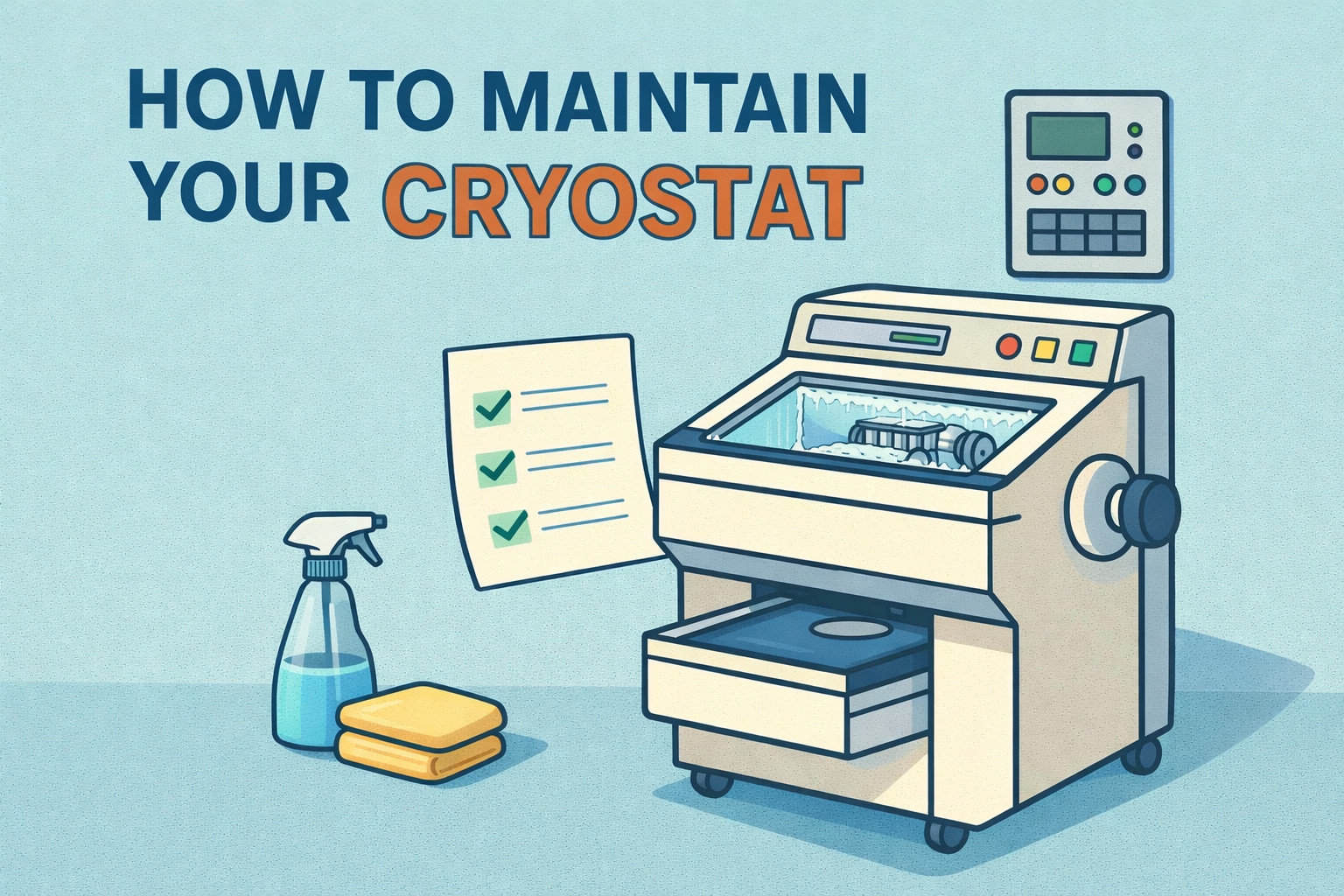
Proper cryostat maintenance is essential for consistent section quality, infection control, and long-term instrument reliability. Whether you’re operating a clinical cryostat daily or supporting a research lab, routine maintenance reduces downtime, prevents ice buildup, and protects both users and specimens.
This guide outlines practical cryostat maintenance procedures based on manufacturer-recommended practices used in high-performance laboratory cryostats, including cleaning, disinfection, defrosting, filter replacement, and critical safety considerations.
Why Cryostat Maintenance Matters
Cryostats operate in extreme temperature conditions and are exposed to biological material, moisture, and cutting debris. Without regular maintenance, several performance and safety issues can develop.
Common issues include
- Frost and ice accumulation
- Poor section quality
- Contamination risk between specimens
- Reduced cooling efficiency
- Premature component failure
Proper maintenance ensures
- Reliable diagnostic results
- Safer operation for staff
- Consistent section quality
- Longer equipment lifespan
- Predictable system performance
Daily Cryostat Maintenance Tasks
Remove Section Waste After Each Use
Section waste should be removed after every sectioning operation and before changing specimens. Accumulated debris increases contamination risk and interferes with airflow and temperature stability.
- Use an extraction system if equipped
- Alternatively, remove waste with a paper towel soaked in alcohol-based disinfectant
- Avoid starting chemical disinfection until anti-roll components are repositioned
Wipe Down High-Contact Surfaces
At the end of each session, clean all high-contact and exposed areas inside the cryochamber to reduce contamination risk.
- Clean exposed surfaces inside the cryochamber
- Wipe blade holders, anti-roll guides, and waste trays
- Use approved laboratory disinfectants only
- Wear gloves and appropriate PPE at all times
Weekly Cryostat Maintenance and Cleaning
Chamber Cleaning and Disinfection
Regular chamber cleaning is a core part of cryostat maintenance and should follow strict handling procedures:
- Remove all specimens before cleaning
- Do not use external heaters to dry the chamber
- Allow all components to dry completely before restarting
- Never turn the instrument on while moisture is present
Inspect Blades and Safety Guards
Mechanical inspection is a key part of weekly cryostat maintenance:
- Inspect knife holders and blade safety guards
- Confirm handwheel locks function properly
- Never leave exposed blades unattended
- Replace damaged or worn blade holders immediately
Scheduled Defrosting and Ice Control
When to Defrost a Cryostat
Defrosting is essential to prevent ice buildup and maintain proper airflow and visibility. It should be performed:
- On a programmed schedule (often once every 24 hours)
- When ice buildup affects airflow or visibility
- Before deep cleaning or servicing
Before Defrosting
- Remove all specimens
- Empty waste trays
- Ensure no samples remain in the chamber
Safe Defrosting Practices
Proper defrosting is critical to maintaining cryostat performance and preventing recurring ice buildup.
Filter and Airflow Maintenance
HEPA Filter Replacement
If your cryostat uses a HEPA filtration system, routine replacement is essential for maintaining airflow and contamination control.
- Replace filters approximately every 3 months
- Label filters with the installation date
- Remove filters before full defrost cycles
- Dispose of used filters according to laboratory regulations
Extraction System Care
For cryostats equipped with section extraction systems, regular maintenance is required to ensure proper airflow and debris removal.
- Clean hoses regularly using approved disinfectants
- Replace hoses after repeated cleanings
- Seal unused extraction ports with silicone stoppers
- Prevent debris from entering the extraction opening
UVC Lamp Maintenance and Safety
Some cryostats include integrated UVC lamps for chamber decontamination. Proper handling is critical for safety and effectiveness.
- Replace the UVC lamp when indicator lights signal failure
- Disconnect power before replacement
- Never operate UVC systems with the chamber window open
- If a lamp breaks, evacuate the area and follow mercury cleanup protocols
Long-Term Cryostat Maintenance Best Practices
To extend instrument life and reduce service calls, cryostats should be maintained not only internally—but also within a properly controlled environment.
Final Thoughts on Cryostat Maintenance
Effective cryostat maintenance is not a single task—it’s a routine. Daily cleaning, scheduled defrosting, filter changes, and safety checks all work together to preserve section quality, protect staff, and extend the life of a critical laboratory instrument.
Laboratories that prioritize maintenance experience fewer failures, more consistent results, and lower long-term service costs.
Looking for a Replacement Cryostat?
Need a reliable cryostat without the high cost of buying new? At Amtech Medical, we offer a curated selection of high-quality used cryostats designed for clinical and laboratory environments.
Every system is professionally inspected, refurbished, and tested to ensure dependable performance, safety, and long-term reliability.