
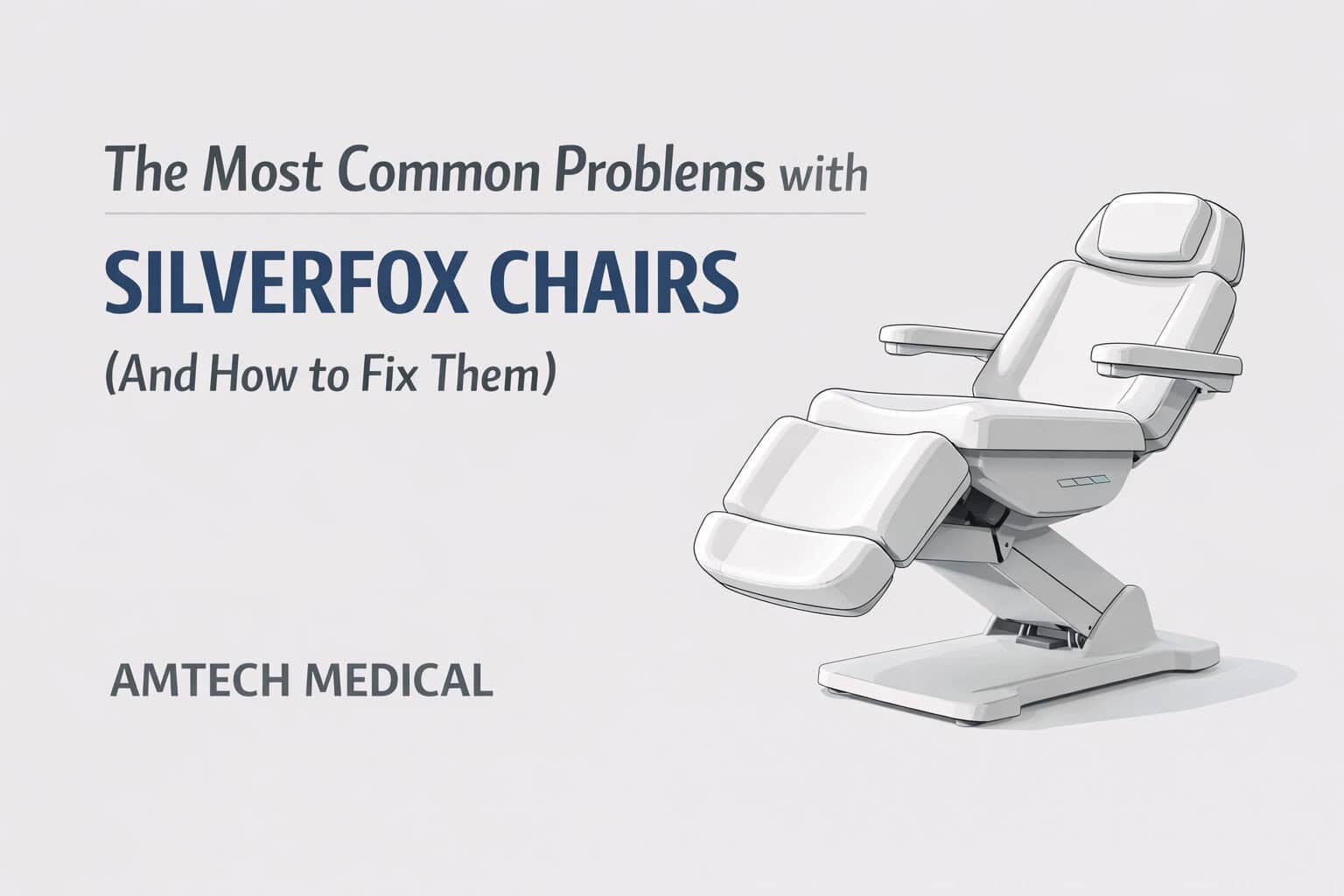
Silverfox procedure chairs are widely used in dermatology clinics, aesthetic practices, and medical spas due to their versatility, patient comfort, and affordability. These chairs provide reliable positioning support for a wide range of treatments, from laser procedures to examinations and cosmetic treatments.
While Silverfox chairs are generally dependable, their high usage volume means certain mechanical and structural components experience wear over time. Understanding these common failure points allows clinics to troubleshoot problems quickly, minimize downtime, and extend equipment lifespan.
We spoke with Amtech Medical field service technician Daniel Silva about the most common Silverfox chair failures seen in real-world clinical environments. These issues are consistent across many models and typically involve actuators, armrest assemblies, and cosmetic structural components.
This guide explains the most common Silverfox chair problems, how to identify them, and when professional service is required.
Actuator Failure: Chair Will Not Move or Adjust
Actuator failure is one of the most common issues affecting Silverfox chairs. Actuators are responsible for controlling movement functions such as height adjustment, backrest reclining, and footrest positioning. When an actuator fails, the affected section of the chair becomes completely unresponsive.
- Backrest does not recline or return upright
- Footrest does not raise or lower
- Chair height remains fixed and will not adjust
- No motor sound, clicking, or movement when pressing the remote
In most cases, the actuator itself has failed rather than the control board. Failed actuators typically show no mechanical response when activated. Electrical wear, internal motor failure, and long-term usage are the most common contributing factors.
Recommended Resolution
Actuator replacement requires proper diagnosis to confirm whether the actuator or control system is at fault. Most actuator failures require professional service and component replacement.
Silverfox Chair Actuator Repair Available
Contact Amtech Medical →Fast response • Nationwide service • Experienced equipment technicians
Broken or Loose Armrests
Armrest assemblies are one of the most frequent structural failure points on Silverfox chairs. Because patients often use armrests for support when getting on or off the chair, excessive force can damage internal mounting components.
- Armrest becomes loose or unstable
- Armrest drops suddenly or will not hold position
- Visible structural looseness or stripped mounting hardware
- Armrest hangs or dangles freely
Silverfox armrests rely on mounting bolts and structural stops to maintain positioning. Excessive weight or repeated stress can strip threads or deform mounting points, resulting in loss of structural stability.
Depending on the severity, armrest repair may involve hardware replacement or full armrest assembly replacement.
Loose or Detached Plastic Covers
Silverfox chairs use protective plastic covers to conceal internal components and maintain a clean, professional appearance. These panels are typically secured using push-pin fasteners, which can loosen or fail over time.
- Plastic panels hanging or detached beneath the chair
- Visible gaps in cosmetic trim or housing
- Panels temporarily secured using tape
- Loose or missing push-pin fasteners
- Replace worn push-pin fasteners
- Reattach loose plastic panels securely
- Replace damaged plastic covers if necessary
While cosmetic issues do not typically affect chair functionality, maintaining structural integrity improves safety, durability, and professional appearance.
Footrest Extension Sensor Prevents Movement
Many Silverfox chairs include an extendable footrest designed to accommodate taller patients. This extension mechanism includes a built-in safety sensor that prevents footrest movement when the extension is not fully retracted. This safety feature protects internal mechanical components from damage during operation.
- Footrest does not move when using the remote
- Other chair functions operate normally
- Footrest extension visibly remains partially extended
- No mechanical noise or actuator movement from footrest
The safety interlock sensor prevents actuator movement when the extension is not fully seated. This protects the actuator system and mechanical linkage from stress or misalignment damage.
Recommended Resolution
- Fully retract the footrest extension until seated properly
- Verify the extension mechanism is properly aligned
- Test footrest operation after re-seating extension
This issue is typically resolved without service once the extension is fully seated.
Upholstery Wear, Cracking, and Cosmetic Damage
Silverfox chairs experience upholstery wear over time, particularly in high-volume practices where chairs are used continuously throughout the day. While this does not affect mechanical functionality, it can impact patient perception and overall clinic appearance.
- Cracking or peeling on seat cushions or backrests
- Discoloration or fading of upholstery surfaces
- Tears forming near seams or high-stress areas
- Visible cosmetic deterioration with continued usage
- Replace individual upholstery panels
- Install replacement upholstery kits
- Perform professional reupholstery services
- Replace chair if structural wear is extensive
Maintaining upholstery helps preserve both patient comfort and professional presentation.
Understanding Long-Term Reliability of Silverfox Chairs
Silverfox chairs are designed to provide affordable and practical positioning solutions for dermatology and aesthetic clinics. Their widespread use reflects their reliability, but certain components experience wear faster due to their lightweight construction and frequent use.
- Actuator motor assemblies
- Armrest mounting hardware
- Plastic housing and cosmetic covers
- Footrest extension sensors and linkage systems
- Upholstery materials and protective coverings
These wear patterns are normal for frequently used clinical equipment and can be managed through routine maintenance and timely repairs.
Preventive Maintenance Best Practices for Silverfox Chairs
Routine preventive care significantly extends the lifespan of Silverfox chairs and reduces the likelihood of unexpected failures. Early detection of wear allows clinics to address issues before they affect operations.
- Avoid placing excessive weight on armrests
- Inspect structural hardware regularly for looseness or wear
- Replace worn push-pin fasteners as needed
- Ensure footrest extensions are properly seated during use
- Clean and maintain upholstery regularly
- Schedule professional equipment inspections annually
Preventive maintenance reduces downtime, improves safety, and extends equipment service life.
Silverfox Chair Repair, Parts, and Service Support
Silverfox chairs provide dependable positioning and comfort for a wide range of treatments. While certain components experience wear over time, most issues can be resolved quickly through proper diagnosis and repair.
Understanding early warning signs and implementing preventive maintenance ensures reliable performance and minimizes disruption to your clinical workflow.
Need Silverfox Chair Repair or Replacement Parts?
Contact Amtech Medical →Fast response • Nationwide service • Experienced equipment technicians