
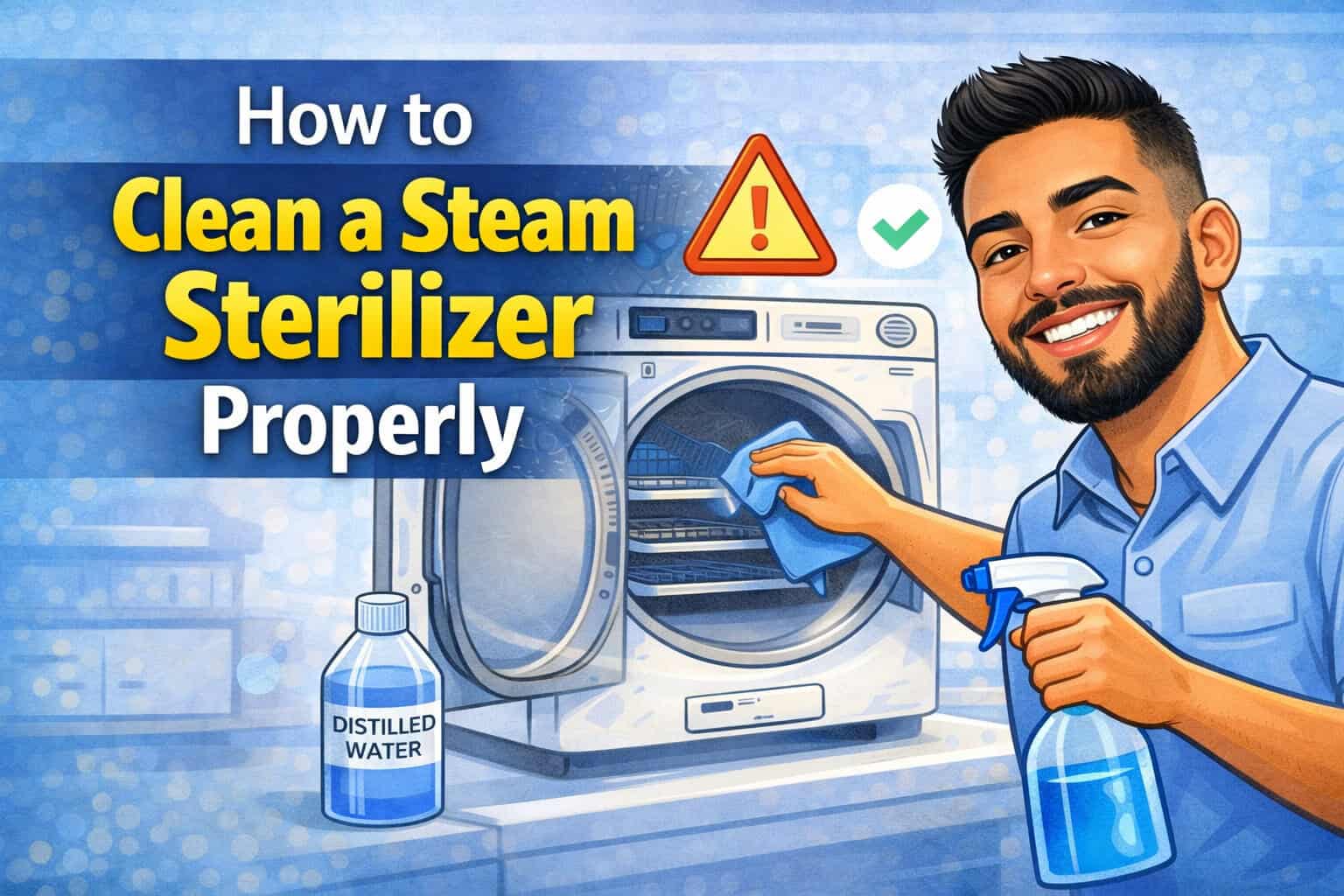
Steam sterilizers, including autoclaves, rely on clean internal chambers and components to operate effectively. Without regular cleaning, mineral buildup, debris, and biological residue can interfere with sterilization cycles and damage internal components. Proper cleaning helps ensure consistent sterilization and prevents costly repairs.
Why Cleaning a Steam Sterilizer Is Important
Key takeaway: Steam sterilizers operate using high-temperature pressurized steam. Over time, contaminants can accumulate inside the chamber and plumbing system—reducing performance and increasing the risk of failures.
Steam sterilizers operate using high-temperature pressurized steam. Over time, contaminants accumulate inside the chamber and plumbing system.
Common buildup includes
- Mineral deposits from water
- Biological residue
- Dust and debris
- Rust and corrosion particles
This buildup can cause
- Incomplete sterilization
- Cycle failures
- Chamber damage
- Sensor malfunctions
- Reduced equipment lifespan
Routine cleaning helps prevent these issues and keeps sterilization performance consistent.
How Often Should You Clean a Steam Sterilizer?
Steam sterilizers require cleaning at multiple intervals. Use the schedule below as a baseline and adjust based on usage and your manufacturer’s recommendations.
- Wipe chamber interior
- Clean door gasket
- Remove visible debris
- Clean trays and racks
- Wipe chamber thoroughly
- Inspect chamber surfaces
- Perform full chamber cleaning
- Check drain screen
- Inspect water reservoir
- Remove mineral deposits
- Clean after heavy usage
Important: Always follow manufacturer cleaning instructions, approved chemicals, and water-quality guidelines for your specific sterilizer model.
Step-by-Step Guide: How to Clean a Steam Sterilizer
Follow these steps to safely clean your autoclave and help maintain consistent sterilization performance.
Safety first: Use only manufacturer-approved cleaning agents and tools. Avoid harsh chemicals that can damage seals, sensors, and stainless surfaces.
Turn Off and Cool the Sterilizer
Before cleaning, make sure the unit is fully shut down and safe to handle:
- Turn off the sterilizer
- Allow it to cool completely
- Disconnect power if required
Remove Trays and Internal Components
Remove and set aside:
- Instrument trays
- Tray racks
- Internal removable parts
Clean these components separately using:
Clean the Sterilizer Chamber
Using a soft cloth, gently clean the chamber interior:
- Wipe chamber interior surfaces
- Remove residue and buildup
- Focus on corners and drain areas
Clean the Door Gasket
The door gasket is critical for maintaining pressure. Carefully:
- Wipe the gasket with a damp cloth
- Remove debris along the seal surface
- Inspect for cracks or wear
Clean the Drain Screen
The drain screen collects debris and plays a critical role in proper water flow.
Remove and clean:
- Rinse with clean water
- Remove visible buildup
- Reinstall properly
Clean the Water Reservoir (If Applicable)
If your sterilizer includes a water reservoir, it must be cleaned regularly to prevent contamination and mineral buildup.
- Drain existing water
- Clean the reservoir interior
- Refill with distilled water only
Reassemble and Test the Sterilizer
After cleaning, reassemble all components and verify proper operation:
- Reinstall trays and internal components
- Close the door securely
- Run an empty cycle
What Cleaning Products Are Safe for Steam Sterilizers?
Using the correct cleaning products is essential to protect your sterilizer’s chamber, seals, and internal components. Always use manufacturer-approved materials whenever possible.
Safe options include
- Mild neutral detergents
- Manufacturer-approved cleaners
- Distilled water
Avoid
- Bleach
- Abrasive cleaners
- Steel wool
- Acidic cleaners
Important: Harsh or abrasive cleaning products can damage the chamber surface, degrade seals, and lead to premature equipment failure.
Common Steam Sterilizer Cleaning Mistakes
Even with good intentions, improper cleaning practices can lead to serious performance issues and costly repairs.
Why this matters: These mistakes can cause permanent damage, reduce sterilization effectiveness, and significantly shorten the lifespan of your equipment.
Signs Your Steam Sterilizer Needs Cleaning
If your sterilizer is not performing as expected, it may be due to internal buildup or poor maintenance.
Pro tip: Regular cleaning helps prevent these issues before they impact performance, ensuring reliable sterilization and reducing downtime.
Professional Steam Sterilizer Maintenance
In addition to routine cleaning, steam sterilizers require professional service to maintain safe and reliable operation.
Annual maintenance helps identify wear, calibration drift, and hidden issues before they lead to downtime or failed sterilization cycles.
Steam Sterilizer Models That Require Regular Cleaning
Routine cleaning is required for all steam sterilizers, regardless of brand or configuration.
Final Thoughts: How to Clean a Steam Sterilizer Safely
Proper cleaning ensures reliable sterilization, prevents equipment damage, and extends the lifespan of your sterilizer.
By following a regular cleaning schedule and using approved cleaning methods, your steam sterilizer will operate safely and efficiently for years.