

Match the chair to the way your practice actually works.
Compare Silverfox facial and treatment chairs by procedure type, provider workflow, patient positioning, room size, and practice setting.
Choosing a Silverfox facial chair can be surprisingly difficult.
Silverfox makes a wide range of professional facial, treatment, and medical-aesthetic chairs, but many models are identified primarily by numbers such as 2218BN, 2222BN, 2246BN, and 2246EBN. At first glance, those model numbers do not tell you why one chair may be better for an esthetician, injector, medical spa, dermatology office, or women’s health practice.
The differences become much clearer when the chairs are compared according to how they will actually be used.
An esthetician performing traditional facials has different positioning requirements than an injector performing Botox and dermal filler procedures. A dermatology office may place more importance on weight capacity, cleaning, patient access, and Trendelenburg positioning. A busy medical spa may value powered adjustments, foot controls, memory positions, and the ability to rotate the chair.
Key takeaway: There is no single Silverfox facial chair that is best for every practice. The right model depends on the procedures performed, how often the patient needs to be repositioned, the amount of space in the treatment room, and how closely the provider needs to work around the patient.
This guide breaks down the current Silverfox facial and treatment-chair lineup by real-world use case so you can determine which model makes the most sense for your practice.
Silverfox Facial Chair Comparison
The table below provides a quick overview before we look at each model in detail.
| Model | Main Advantage | Best For | Ideal Practice Type |
|---|---|---|---|
| 2206A | Affordable hydraulic design | Basic facials, waxing, brows, lashes | Estheticians, day spas, salons |
| 2219B | Entry-level electric positioning | General facial and aesthetic services | Estheticians, spas, smaller med spas |
| 2221D | Three powered functions with versatile positioning | Facials, lashes, waxing, longer treatments | Spas, esthetic clinics, med spas |
| 2220D | Four-motor positioning with hands-free control options | Multi-service treatment rooms | Busy med spas, aesthetic clinics |
| 2235D | Fast repositioning and convenient chair-mounted controls | High-throughput treatment rooms | Med spas, facial clinics |
| 2218BN | Heavy-duty medical-oriented design | Medical aesthetics and broader patient populations | Dermatology, med spas, physician offices |
| 2222BN | Tapered base improves clinician access | Botox, fillers, facial injections | Injectors, cosmetic dermatology, med spas |
| 2246BN | Advanced four-motor positioning with rotation | Multi-service medical-aesthetic rooms | Med spas, dermatology, aesthetic medicine |
| 2246EBN | Premium 2246 configuration with broad treatment versatility | Injectables, lasers, facials, advanced aesthetics | Premium med spas, cosmetic practices |
| 2246EBNS | 2246 platform configured for stirrups | Gynecologic and women’s wellness procedures | OB-GYN, women’s wellness, medical practices |
| 2270FB | Compact single-column working area | Smaller rooms and multi-purpose aesthetic treatments | Med spas, day spas, aesthetic clinics |
| 2271B | Comfort-focused design with removable cushion system | Long treatments and upscale treatment rooms | Premium spas, med spas, medical aesthetics |
How to Choose the Right Silverfox Facial Chair
Before comparing individual models, it helps to understand which features actually change the way a treatment room functions.
Hydraulic vs. Electric Positioning
The biggest dividing line is hydraulic versus electric positioning. A hydraulic chair such as the 2206A is mechanically simple and perfectly adequate for many esthetic treatments. Electric models become more valuable when practitioners regularly reposition the patient during a procedure or want to adjust working height without interrupting the treatment.
Two, Three, or Four Powered Adjustments
Entry-level electric chairs may power only the most frequently used movements. More advanced models add powered seat tilt and leg positioning. A fully powered four-motor chair gives the practitioner much finer control over patient position without manually moving individual sections.
Medical and Workflow Features
For medical spas and clinical environments, features such as Trendelenburg positioning, programmable memory positions, reset functions, higher weight capacities, removable upholstery, foot controls, lower entry heights, and chair rotation can become more important than they would be in a traditional spa.
What matters most: Do not choose a chair based only on motor count. A feature such as a tapered base, chair rotation, low entry height, or removable cushion system may have a greater day-to-day impact than one additional powered movement.
Silverfox 2206A: Best Entry-Level Hydraulic Facial Chair
The Silverfox 2206A is the simplest chair in this comparison and one of the most logical choices for traditional esthetics.
Rather than relying on multiple electric motors, the chair uses a hydraulic foot-pump system for height adjustment. The back and leg sections can also be repositioned, giving providers the essential movement needed for facial and spa services without the complexity of a premium electric chair.
That simplicity can be an advantage.
An esthetician performing facials, waxing, brow treatments, lash services, or similar procedures may not need four electric motors, programmable memory positions, or a powered rotating platform. The client is often positioned near the beginning of the treatment and remains there for most of the appointment.
Best use: Traditional esthetics, facials, waxing, lashes, brows, and basic spa treatments.
Best practice types: Independent estheticians, salons, day spas, lash and brow studios.
Choose the 2206A when: You want a professional treatment chair while keeping cost and mechanical complexity low.
The 2206A is especially appropriate for a practice that needs a dependable treatment chair but does not benefit enough from powered positioning to justify moving into a multi-motor platform.
Silverfox 2219B: Best Entry-Level Electric Facial Chair
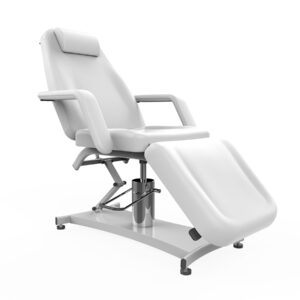
The Silverfox 2219B is an important step up for a practice that wants electric convenience without jumping directly into the most advanced models.
The chair provides powered adjustment for the movements providers are most likely to change during a treatment while retaining simpler adjustment methods for less frequently used positions.
The practical improvement over a hydraulic chair is workflow. Adjusting the client’s working height or bringing the patient upright can be performed electrically rather than through repeated manual adjustments.
Best use: Facials, skincare treatments, waxing, lashes, brows, and general aesthetic services.
Best practice types: Esthetic clinics, day spas, salons, and smaller medical spas.
Choose the 2219B when: You want an affordable move into electric positioning without paying for a full premium treatment-chair platform.
For many growing esthetic practices, the 2219B is a sensible transition between basic spa furniture and the more advanced electric chairs used in larger medical-aesthetic environments.
Silverfox 2221D: Best Value Multipurpose Electric Chair
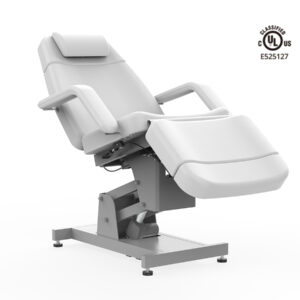
The Silverfox 2221D fills the middle ground between a basic electric chair and a fully powered premium model.
Its powered functions control chair height, backrest position, and seat tilt, while the foot section uses a simpler assisted adjustment system. This provides considerably more positioning flexibility than the entry-level models without requiring every movement to have its own motor.
That versatility is useful when a single room performs several different services. A client can be positioned upright for facial work, reclined for lashes or cosmetic procedures, or placed closer to a flat position when the service requires it.
Best use: Facials, waxing, lash treatments, skin treatments, and general spa or medical-aesthetic services.
Best practice types: Estheticians, day spas, medical spas, and aesthetic clinics with broad service menus.
Choose the 2221D when: You want more powered positioning than an entry-level electric chair but do not need a fully powered premium platform.
For practices trying to balance budget, patient comfort, and treatment versatility, the 2221D is one of the more practical middle-tier choices in the lineup.
Contact Amtech Medical for current availability, configuration options, and pricing.
Contact for AvailabilitySilverfox 2220D: Best Fully Powered Chair for General Med-Spa Use
The Silverfox 2220D moves into a more advanced four-motor configuration.
Powered height, backrest, footrest, and seat-inclination control allow providers to make small patient-position changes throughout a procedure without manually repositioning individual sections. The chair can also be configured with hands-free control options, which can be useful when providers are gloved or already handling instruments.
That becomes increasingly valuable in a multi-service medical spa where the same room may be used for facial procedures, laser treatments, body services, or other aesthetic treatments throughout the day.
Best use: Laser procedures, advanced skincare, facials, medical aesthetics, and multi-purpose treatment rooms.
Best practice types: Busy medical spas, cosmetic clinics, aesthetic medicine practices, and high-volume facial clinics.
Choose the 2220D when: You want full electric positioning and efficient provider control without moving into the highest-priced premium models.
The online listing for Silverfox 2220D could not be found. Contact Amtech Medical for current availability.
Contact for AvailabilitySilverfox 2235D: Best for Fast Patient Repositioning
The Silverfox 2235D is another advanced electric treatment chair, but its workflow features are what make it stand out.
The chair is designed so providers can access positioning controls from convenient working locations rather than repeatedly searching for a handheld remote. It also supports fast transitions between more upright and more reclined treatment positions.
For a low-volume treatment room, that may appear to be a small advantage. For a practice seeing patients continuously throughout the day, reducing repetitive positioning steps can make room turnover and provider workflow noticeably smoother.
Best use: Procedures that frequently alternate between upright and reclined patient positions.
Best practice types: Busy medical spas, aesthetic treatment centers, facial clinics, and multi-provider practices.
Choose the 2235D when: Fast patient repositioning and easy access to chair controls are major priorities.
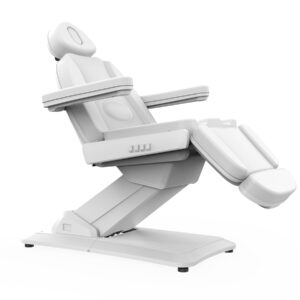
Silverfox 2218BN: Best Heavy-Duty Medical-Aesthetic Chair
The Silverfox 2218BN is where the Silverfox lineup becomes particularly relevant to medical and physician-led aesthetic practices.
The model is designed as a heavy-duty treatment chair with a listed maximum patient load around 440 pounds. It also offers features such as Trendelenburg positioning, programmable memory positions, linked armrest movement, and detachable upholstery sections that support cleaning and serviceability.
Those features change the ideal buyer.
A traditional esthetician may rarely need Trendelenburg positioning or a higher patient-capacity platform. A dermatology or medical-aesthetic practice, however, may place much greater value on broader patient accommodation, repeatable treatment positions, durable construction, and a chair designed around clinical workflow.
Best use: Dermatology procedures, medical aesthetics, laser treatments, and procedures involving a broad patient population.
Best practice types: Dermatology offices, physician-led medical spas, cosmetic medical practices, and clinics.
Choose the 2218BN when: You prioritize heavy-duty construction, medical-oriented positioning, and higher patient capacity.
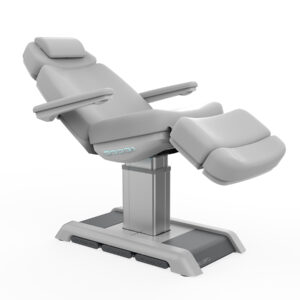
Silverfox 2222BN: Best Facial Chair for Botox, Fillers, and Injectables
The Silverfox 2222BN has one of the clearest use cases in the entire lineup.
Its tapered base is designed to create more room around the lower portion of the chair, allowing a practitioner to get closer to the patient. That can be particularly valuable for injectors who work seated on a stool near the patient’s face.
During Botox, dermal filler, and other facial injection procedures, a bulky chair pedestal can interfere with the provider’s knees, feet, or stool position. The tapered base gives the clinician additional working clearance without requiring the patient to be moved farther away.
The chair also offers advanced positioning features that make it useful beyond injectables, including Trendelenburg capability and programmable positions.
Best use: Botox, dermal fillers, facial injections, and procedures requiring close access to the head and face.
Best practice types: Injection clinics, medical spas, cosmetic dermatology offices, and plastic surgery practices.
Choose the 2222BN when: Injector ergonomics and close patient access are among your highest priorities.
Best Silverfox chair for injectables: If the treatment room is primarily used for Botox and fillers, the 2222BN deserves special consideration because its base design solves a provider-access problem that is not captured by simply comparing motor counts.
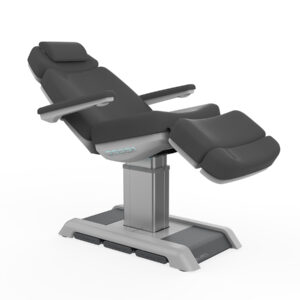
Silverfox 2246BN: Best Advanced Multi-Purpose Treatment Chair
The Silverfox 2246BN is one of the more advanced multi-function treatment chairs in the lineup.
Its four-motor system provides extensive powered patient positioning, while the chair’s rotational capability gives providers another important advantage: the ability to reposition the patient relative to the room rather than constantly moving stools, carts, lasers, or other equipment around the patient.
That can make a significant difference in a treatment room that performs several procedure types.
A provider may work from one side of the patient during a facial procedure, move to the head of the chair for injectables, or rotate the patient to create better clearance around a laser platform. A rotating chair gives the room more flexibility without requiring a larger floor plan.
Best use: Injectables, laser treatments, facial procedures, dermatology, and multi-service medical aesthetics.
Best practice types: Medical spas, cosmetic dermatology offices, aesthetic medicine clinics, and plastic surgery practices.
Choose the 2246BN when: You need advanced powered positioning and rotational access in a room used for several different procedures.
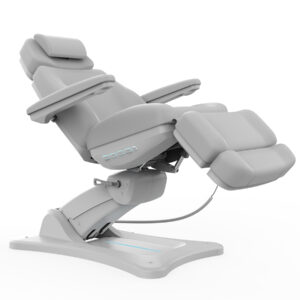
Silverfox 2246EBN: Best Overall Premium Silverfox Facial Chair
For a practice looking for one chair capable of supporting a very broad treatment menu, the Silverfox 2246EBN is one of the strongest overall options in the Silverfox lineup.
The 2246EBN combines four powered adjustments with a rotating platform, programmable positions, reset functionality, and both hand and foot control options. The design also provides practical treatment-room features such as removable upholstery sections, adjustable patient supports, and compatibility with exam-room accessories.
The important advantage is not any one feature. It is that the 2246EBN combines many of the features a multi-service aesthetic practice is likely to want in one platform.
A practice can use the same treatment room for injectables, laser procedures, skin treatments, and conventional facial services without the chair becoming the limiting factor.
Best use: Injectables, lasers, medical aesthetics, advanced facial treatments, skin procedures, and general cosmetic treatment.
Best practice types: Premium medical spas, dermatology practices, cosmetic surgery offices, laser clinics, and multi-service aesthetic centers.
Choose the 2246EBN when: You want maximum versatility and expect the treatment room to support many different services.
Best overall premium choice: For a multi-service medical spa that wants to standardize around one chair platform, the 2246EBN is one of the safest choices because it offers broad positioning capability without being built around only one procedure type.
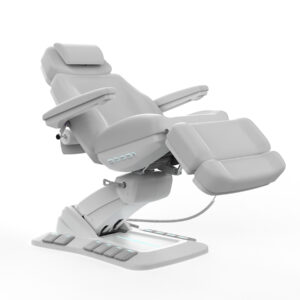
Silverfox 2246EBNS: Best for Gynecology and Women’s Wellness Procedures
Despite sharing the 2246 name, the Silverfox 2246EBNS should not be evaluated as a conventional facial chair.
The EBNS configuration adapts the 2246 platform for procedures requiring gynecologic stirrups. That changes both the room setup and the type of practice for which the chair makes sense.
A traditional esthetic treatment room does not benefit from stirrups. A gynecology, women’s wellness, or physician-led practice performing procedures that require that patient position may.
Best use: Gynecologic examinations and procedures, women’s wellness services, and medical-aesthetic procedures that require stirrup positioning.
Best practice types: OB-GYN offices, women’s wellness clinics, physician practices, and appropriately equipped medical spas.
Choose the 2246EBNS when: Your procedure mix genuinely requires stirrups or gynecologic positioning.
For a medical spa that does not perform those procedures, the standard 2246BN or 2246EBN is generally the more logical choice.
Select the EBNS configuration with stirrups on the product page.
View 2246EBNSSilverfox 2270FB: Best Facial Chair for Small Treatment Rooms
The Silverfox 2270FB is particularly interesting for practices where usable space around the provider matters.
Its single-column lifting architecture creates a relatively open working area beneath and around the chair. That can give a provider more room for a stool, cart, or treatment equipment than some broader pedestal designs.
The chair still provides four-motor electric positioning, allowing it to function as much more than a simple spa bed. That makes it useful in compact rooms that still need professional patient positioning.
Best use: Facial treatments, head-spa services, laser services, lash and brow procedures, and general medical-spa treatments in smaller rooms.
Best practice types: Medical spas, day spas, aesthetic clinics, and offices converting smaller rooms into treatment spaces.
Choose the 2270FB when: Floor space and provider clearance are major considerations.
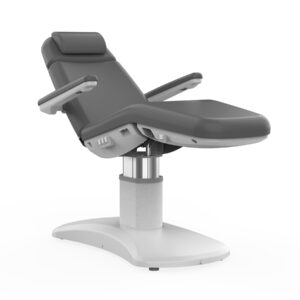
Silverfox 2271B: Best for Comfort and Replaceable Upholstery
The Silverfox 2271B takes a somewhat different approach from models that focus primarily on provider access or equipment clearance.
Its removable cushion system makes the upholstered sections easier to clean, replace, or change without necessarily treating worn upholstery as the end of the entire chair’s useful life. That can be valuable in a high-use treatment environment where cushions eventually show wear before the underlying electric platform does.
The chair also provides powered positioning and a comfort-oriented seat-tilt range that can create a more relaxed, near-zero-gravity patient posture.
Best use: Longer aesthetic treatments, premium facials, injectables, examinations, and procedures where patient comfort matters.
Best practice types: High-end spas, medical spas, aesthetic clinics, and modern physician offices.
Choose the 2271B when: Comfort, appearance, and serviceable upholstery are major priorities.
Which Silverfox Facial Chair Is Best for Each Type of Practice?
The easiest way to narrow the lineup is to begin with the services you actually perform.
Best Silverfox Facial Chair for an Esthetician
For a traditional esthetician or day spa, the 2206A, 2219B, and 2221D are the most logical starting points.
- 2206A: Best when low cost, hydraulic simplicity, and basic positioning are enough.
- 2219B: Best when electric height and back positioning would improve workflow.
- 2221D: Best when the room performs a broader range of services and needs more powered adjustment.
Best Silverfox Facial Chair for a Medical Spa
A general medical spa has more options because the ideal chair depends on the treatment menu.
The 2220D and 2235D make sense when the priority is efficient multi-motor positioning. The 2270FB makes sense when treatment-room space is limited. The 2271B is compelling when client comfort and replaceable cushions matter. The 2246BN and 2246EBN are the strongest candidates when the room needs maximum flexibility.
Best Silverfox Facial Chair for Botox and Fillers
The 2222BN deserves special attention for an injectables-focused practice because its tapered base provides additional space for the injector to work close to the patient’s face.
For a practice that combines injectables with lasers, facial services, or other advanced procedures, the rotating 2246BN and 2246EBN become especially attractive.
Best Silverfox Chair for Dermatology or a Physician Office
The 2218BN is one of the strongest conventional medical-oriented options because of its heavy-duty construction, broad patient capacity, Trendelenburg capability, and repeatable positioning features.
A practice that also performs a large volume of cosmetic procedures may prefer the greater rotational flexibility of the 2246 platform.
Best Silverfox Chair for a Small Treatment Room
The 2270FB is one of the strongest candidates when working clearance is limited because its single-column design leaves a relatively open area around the provider.
Best Silverfox Chair for Women’s Health Procedures
For procedures that specifically require stirrups, the 2246EBNS is the appropriate specialty configuration. A conventional facial chair should not be selected simply because it is less expensive if the intended procedure requires different patient positioning.
Quick picks by use case
- Best budget / hydraulic option: 2206A
- Best entry-level electric option: 2219B
- Best mid-range multipurpose option: 2221D
- Best general four-motor med-spa option: 2220D
- Best for rapid repositioning: 2235D
- Best heavy-duty medical option: 2218BN
- Best for injectables: 2222BN
- Best advanced rotating platform: 2246BN
- Best overall premium option: 2246EBN
- Best specialty gynecology configuration: 2246EBNS
- Best for small treatment rooms: 2270FB
- Best for comfort and replaceable upholstery: 2271B
Hydraulic vs. Electric Silverfox Facial Chairs
The choice between hydraulic and electric is primarily a question of how often the chair needs to move during the workday.
For relatively static treatments, hydraulic positioning can be completely adequate. A provider may set the patient’s height and recline at the beginning of a facial and make few changes until the service is complete.
Electric chairs become increasingly useful as the treatment menu becomes more complex.
An injector may change patient angle several times during a procedure. A laser provider may need a different working height depending on the treatment area. A room performing both facial and body services may alternate repeatedly between upright, reclined, tilted, and nearly flat positions.
In those situations, electric controls are not simply a luxury feature. They can improve provider ergonomics, reduce repetitive manual adjustments, and make it easier to reproduce a preferred treatment position from one patient to the next.
Do You Need a Four-Motor Facial Chair?
Not every practice needs one.
A four-motor facial chair is valuable when the provider routinely needs independent control over height, backrest, seat tilt, and leg position. That flexibility matters most in rooms that support multiple procedure types or where the chair is adjusted frequently throughout the appointment.
A traditional esthetician who performs primarily facials may receive little practical benefit from paying for every available powered movement. A multi-provider medical spa, on the other hand, may use those adjustments throughout the day.
Bottom line: More motors give you more positioning control, but the best chair is the one whose features match the procedures performed in the room. Do not pay for complexity your providers will never use, and do not under-specify a chair that will be repositioned constantly.
What Is the Best Silverfox Facial Chair Overall?
There is no universal winner, but several models stand out for particular buyers.
If we had to select one chair for a multi-service medical spa without knowing the exact treatment mix, the 2246EBN would be one of the safest premium choices because it combines broad powered positioning, rotation, programmable positions, provider control options, and a platform suitable for several different aesthetic services.
That does not mean every practice should automatically buy the most expensive or most heavily equipped chair.
A practice that performs nothing but facials may get everything it needs from a 2219B or 2221D. An injector may prefer the working clearance of the 2222BN. A smaller office may gain more from the compact working footprint of the 2270FB. A dermatology practice may prioritize the heavier-duty 2218BN.
The best treatment chair is ultimately the one that fits the procedures performed in the room.
Silverfox Facial Chair FAQs
What is the best Silverfox facial chair for a med spa?
For a multi-service medical spa, the 2246EBN is one of the strongest overall premium choices because it combines broad electric positioning, rotation, programmable positions, and multiple control options. Practices with simpler treatment menus may be better served by the 2220D, 2235D, or 2270FB.
Which Silverfox facial chair is best for Botox and fillers?
The 2222BN is especially well suited to injectables because its tapered base gives the provider more room to work close to the patient’s head and face. The 2246BN and 2246EBN are premium alternatives for practices that also need rotational access and broader multi-procedure capability.
Which Silverfox chair is best for an esthetician?
The 2206A, 2219B, and 2221D are generally the strongest starting points. The 2206A is an economical hydraulic option, the 2219B adds convenient electric positioning, and the 2221D provides additional powered adjustments for a broader treatment menu.
What is the difference between the Silverfox 2246BN and 2246EBN?
Both belong to Silverfox’s advanced 2246 treatment-chair family. The 2246BN provides the core rotating, multi-motor platform, while the 2246EBN is the more fully equipped configuration with a broader convenience and control package for medical-aesthetic and high-end spa environments.
Does a medical spa need a four-motor treatment chair?
Not necessarily. A four-motor chair becomes most useful when providers routinely adjust height, backrest, seat angle, and leg position during different procedures. A spa performing relatively simple facial services may be well served by a less complex chair.
Which Silverfox facial chair is best for a small treatment room?
The 2270FB is one of the strongest choices for a smaller room because its single-column design creates useful working clearance while retaining four-motor positioning.
Which Silverfox chair is best for a dermatology office?
The 2218BN is a strong option when the priorities are heavy-duty construction, patient capacity, Trendelenburg capability, and medical-oriented positioning. Practices performing a larger volume of cosmetic procedures may also consider the 2246BN or 2246EBN.
Can one Silverfox chair be used for both facials and injectables?
Yes. Several models are versatile enough to support both, particularly the 2220D, 2235D, 2246BN, 2246EBN, 2270FB, and 2271B. The best choice depends on how important close provider access, rotation, room size, and powered positioning are to your workflow.
Choosing a Silverfox Treatment Chair for Your Practice
Silverfox model numbers do not immediately explain how dramatically the chairs differ in real-world use.
The 2206A is not simply a cheaper 2246EBN. It is a fundamentally different solution for a practice with simpler positioning requirements.
Likewise, the 2222BN is not just another electric facial chair. Its tapered base gives injectors a specific ergonomic advantage. The 2218BN emphasizes heavy-duty medical use. The 2270FB prioritizes working clearance in a compact footprint. The 2271B emphasizes patient comfort and serviceable upholstery. The 2246EBN combines the broadest collection of premium features for a multi-service aesthetic room.
That is why the best Silverfox facial chair should be selected according to the treatments performed, available room size, patient population, and the way providers prefer to work.
Need Help Choosing a Silverfox Facial Chair?
Amtech Medical offers Silverfox treatment chairs for esthetic, medical-spa, and clinical environments. If you are comparing models and are unsure which chair best fits your procedures, treatment-room layout, or budget, our team can help you narrow the options.
Product note: Available colors, control packages, accessories, and model revisions can change. Confirm current configuration details before ordering.