
Silverfox Facial Chair Guide: Which Model Is Best for Your Practice?

2026 Silverfox Buying Guide

Match the chair to the way your practice actually works.

Compare Silverfox facial and treatment chairs by procedure type, provider workflow, patient positioning, room size, and practice setting.

12 models compared 6+ practice types 1 quick decision guide

Choosing a Silverfox facial chair can be surprisingly difficult.

Silverfox makes a wide range of professional facial, treatment, and medical-aesthetic chairs, but many models are identified primarily by numbers such as 2218BN, 2222BN, 2246BN, and 2246EBN. At first glance, those model numbers do not tell you why one chair may be better for an esthetician, injector, medical spa, dermatology office, or women’s health practice.

The differences become much clearer when the chairs are compared according to how they will actually be used.

An esthetician performing traditional facials has different positioning requirements than an injector performing Botox and dermal filler procedures. A dermatology office may place more importance on weight capacity, cleaning, patient access, and Trendelenburg positioning. A busy medical spa may value powered adjustments, foot controls, memory positions, and the ability to rotate the chair.

Key takeaway: There is no single Silverfox facial chair that is best for every practice. The right model depends on the procedures performed, how often the patient needs to be repositioned, the amount of space in the treatment room, and how closely the provider needs to work around the patient.

This guide breaks down the current Silverfox facial and treatment-chair lineup by real-world use case so you can determine which model makes the most sense for your practice.

Silverfox Facial Chair Comparison

The table below provides a quick overview before we look at each model in detail.

Model Main Advantage Best For Ideal Practice Type
2206A Affordable hydraulic design Basic facials, waxing, brows, lashes Estheticians, day spas, salons
2219B Entry-level electric positioning General facial and aesthetic services Estheticians, spas, smaller med spas
2221D Three powered functions with versatile positioning Facials, lashes, waxing, longer treatments Spas, esthetic clinics, med spas
2220D Four-motor positioning with hands-free control options Multi-service treatment rooms Busy med spas, aesthetic clinics
2235D Fast repositioning and convenient chair-mounted controls High-throughput treatment rooms Med spas, facial clinics
2218BN Heavy-duty medical-oriented design Medical aesthetics and broader patient populations Dermatology, med spas, physician offices
2222BN Tapered base improves clinician access Botox, fillers, facial injections Injectors, cosmetic dermatology, med spas
2246BN Advanced four-motor positioning with rotation Multi-service medical-aesthetic rooms Med spas, dermatology, aesthetic medicine
2246EBN Premium 2246 configuration with broad treatment versatility Injectables, lasers, facials, advanced aesthetics Premium med spas, cosmetic practices
2246EBNS 2246 platform configured for stirrups Gynecologic and women’s wellness procedures OB-GYN, women’s wellness, medical practices
2270FB Compact single-column working area Smaller rooms and multi-purpose aesthetic treatments Med spas, day spas, aesthetic clinics
2271B Comfort-focused design with removable cushion system Long treatments and upscale treatment rooms Premium spas, med spas, medical aesthetics

How to Choose the Right Silverfox Facial Chair

Before comparing individual models, it helps to understand which features actually change the way a treatment room functions.

Hydraulic vs. Electric Positioning

The biggest dividing line is hydraulic versus electric positioning. A hydraulic chair such as the 2206A is mechanically simple and perfectly adequate for many esthetic treatments. Electric models become more valuable when practitioners regularly reposition the patient during a procedure or want to adjust working height without interrupting the treatment.

Two, Three, or Four Powered Adjustments

Entry-level electric chairs may power only the most frequently used movements. More advanced models add powered seat tilt and leg positioning. A fully powered four-motor chair gives the practitioner much finer control over patient position without manually moving individual sections.

Medical and Workflow Features

For medical spas and clinical environments, features such as Trendelenburg positioning, programmable memory positions, reset functions, higher weight capacities, removable upholstery, foot controls, lower entry heights, and chair rotation can become more important than they would be in a traditional spa.

What matters most: Do not choose a chair based only on motor count. A feature such as a tapered base, chair rotation, low entry height, or removable cushion system may have a greater day-to-day impact than one additional powered movement.


Silverfox 2206A: Best Entry-Level Hydraulic Facial Chair

The Silverfox 2206A is the simplest chair in this comparison and one of the most logical choices for traditional esthetics.

Rather than relying on multiple electric motors, the chair uses a hydraulic foot-pump system for height adjustment. The back and leg sections can also be repositioned, giving providers the essential movement needed for facial and spa services without the complexity of a premium electric chair.

That simplicity can be an advantage.

An esthetician performing facials, waxing, brow treatments, lash services, or similar procedures may not need four electric motors, programmable memory positions, or a powered rotating platform. The client is often positioned near the beginning of the treatment and remains there for most of the appointment.

Best use: Traditional esthetics, facials, waxing, lashes, brows, and basic spa treatments.

Best practice types: Independent estheticians, salons, day spas, lash and brow studios.

Choose the 2206A when: You want a professional treatment chair while keeping cost and mechanical complexity low.

The 2206A is especially appropriate for a practice that needs a dependable treatment chair but does not benefit enough from powered positioning to justify moving into a multi-motor platform.
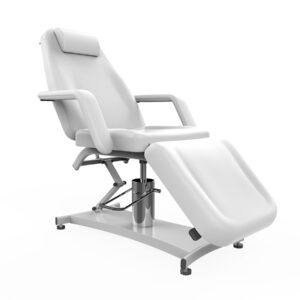
Silverfox 2206A treatment chair
Available from Amtech Medical
Original price was: $1,404.15.Current price is: $950.00.
View 2206A

Silverfox 2219B: Best Entry-Level Electric Facial Chair

The Silverfox 2219B is an important step up for a practice that wants electric convenience without jumping directly into the most advanced models.

The chair provides powered adjustment for the movements providers are most likely to change during a treatment while retaining simpler adjustment methods for less frequently used positions.

The practical improvement over a hydraulic chair is workflow. Adjusting the client’s working height or bringing the patient upright can be performed electrically rather than through repeated manual adjustments.

Best use: Facials, skincare treatments, waxing, lashes, brows, and general aesthetic services.

Best practice types: Esthetic clinics, day spas, salons, and smaller medical spas.

Choose the 2219B when: You want an affordable move into electric positioning without paying for a full premium treatment-chair platform.

For many growing esthetic practices, the 2219B is a sensible transition between basic spa furniture and the more advanced electric chairs used in larger medical-aesthetic environments.
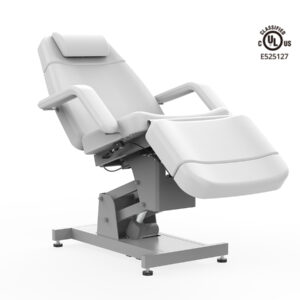
Silverfox 2219B treatment chair
Available from Amtech Medical
Original price was: $1,550.00.Current price is: $1,400.00.
View 2219B

Silverfox 2221D: Best Value Multipurpose Electric Chair

The Silverfox 2221D fills the middle ground between a basic electric chair and a fully powered premium model.

Its powered functions control chair height, backrest position, and seat tilt, while the foot section uses a simpler assisted adjustment system. This provides considerably more positioning flexibility than the entry-level models without requiring every movement to have its own motor.

That versatility is useful when a single room performs several different services. A client can be positioned upright for facial work, reclined for lashes or cosmetic procedures, or placed closer to a flat position when the service requires it.

Best use: Facials, waxing, lash treatments, skin treatments, and general spa or medical-aesthetic services.

Best practice types: Estheticians, day spas, medical spas, and aesthetic clinics with broad service menus.

Choose the 2221D when: You want more powered positioning than an entry-level electric chair but do not need a fully powered premium platform.

For practices trying to balance budget, patient comfort, and treatment versatility, the 2221D is one of the more practical middle-tier choices in the lineup.

Ask Amtech About This Model
Silverfox 2221D

Contact Amtech Medical for current availability, configuration options, and pricing.

Contact for Availability

Silverfox 2220D: Best Fully Powered Chair for General Med-Spa Use

The Silverfox 2220D moves into a more advanced four-motor configuration.

Powered height, backrest, footrest, and seat-inclination control allow providers to make small patient-position changes throughout a procedure without manually repositioning individual sections. The chair can also be configured with hands-free control options, which can be useful when providers are gloved or already handling instruments.

That becomes increasingly valuable in a multi-service medical spa where the same room may be used for facial procedures, laser treatments, body services, or other aesthetic treatments throughout the day.

Best use: Laser procedures, advanced skincare, facials, medical aesthetics, and multi-purpose treatment rooms.

Best practice types: Busy medical spas, cosmetic clinics, aesthetic medicine practices, and high-volume facial clinics.

Choose the 2220D when: You want full electric positioning and efficient provider control without moving into the highest-priced premium models.

Ask Amtech About This Model
Silverfox 2220D

The online listing for Silverfox 2220D could not be found. Contact Amtech Medical for current availability.

Contact for Availability

Silverfox 2235D: Best for Fast Patient Repositioning

The Silverfox 2235D is another advanced electric treatment chair, but its workflow features are what make it stand out.

The chair is designed so providers can access positioning controls from convenient working locations rather than repeatedly searching for a handheld remote. It also supports fast transitions between more upright and more reclined treatment positions.

For a low-volume treatment room, that may appear to be a small advantage. For a practice seeing patients continuously throughout the day, reducing repetitive positioning steps can make room turnover and provider workflow noticeably smoother.

Best use: Procedures that frequently alternate between upright and reclined patient positions.

Best practice types: Busy medical spas, aesthetic treatment centers, facial clinics, and multi-provider practices.

Choose the 2235D when: Fast patient repositioning and easy access to chair controls are major priorities.
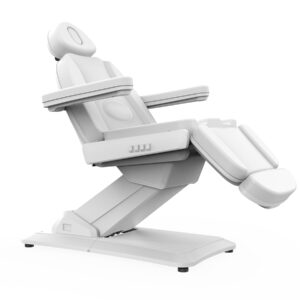
Silverfox 2235D treatment chair
Available from Amtech Medical
Original price was: $2,763.90.Current price is: $1,995.00.
View 2235D

Silverfox 2218BN: Best Heavy-Duty Medical-Aesthetic Chair

The Silverfox 2218BN is where the Silverfox lineup becomes particularly relevant to medical and physician-led aesthetic practices.

The model is designed as a heavy-duty treatment chair with a listed maximum patient load around 440 pounds. It also offers features such as Trendelenburg positioning, programmable memory positions, linked armrest movement, and detachable upholstery sections that support cleaning and serviceability.

Those features change the ideal buyer.

A traditional esthetician may rarely need Trendelenburg positioning or a higher patient-capacity platform. A dermatology or medical-aesthetic practice, however, may place much greater value on broader patient accommodation, repeatable treatment positions, durable construction, and a chair designed around clinical workflow.

Best use: Dermatology procedures, medical aesthetics, laser treatments, and procedures involving a broad patient population.

Best practice types: Dermatology offices, physician-led medical spas, cosmetic medical practices, and clinics.

Choose the 2218BN when: You prioritize heavy-duty construction, medical-oriented positioning, and higher patient capacity.
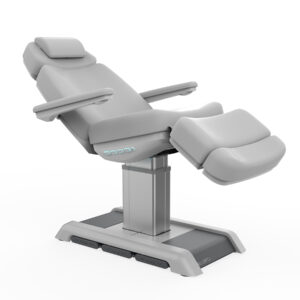
Silverfox 2222BN: Best Facial Chair for Botox, Fillers, and Injectables

The Silverfox 2222BN has one of the clearest use cases in the entire lineup.

Its tapered base is designed to create more room around the lower portion of the chair, allowing a practitioner to get closer to the patient. That can be particularly valuable for injectors who work seated on a stool near the patient’s face.

During Botox, dermal filler, and other facial injection procedures, a bulky chair pedestal can interfere with the provider’s knees, feet, or stool position. The tapered base gives the clinician additional working clearance without requiring the patient to be moved farther away.

The chair also offers advanced positioning features that make it useful beyond injectables, including Trendelenburg capability and programmable positions.

Best use: Botox, dermal fillers, facial injections, and procedures requiring close access to the head and face.

Best practice types: Injection clinics, medical spas, cosmetic dermatology offices, and plastic surgery practices.

Choose the 2222BN when: Injector ergonomics and close patient access are among your highest priorities.

Best Silverfox chair for injectables: If the treatment room is primarily used for Botox and fillers, the 2222BN deserves special consideration because its base design solves a provider-access problem that is not captured by simply comparing motor counts.
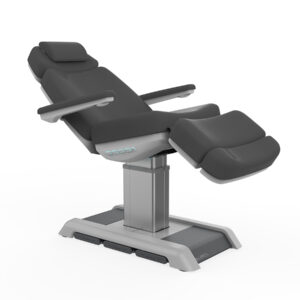
Silverfox 2222BN treatment chair
Available from Amtech Medical
Price range: $3,052.50 through $3,102.45
View 2222BN

Silverfox 2246BN: Best Advanced Multi-Purpose Treatment Chair

The Silverfox 2246BN is one of the more advanced multi-function treatment chairs in the lineup.

Its four-motor system provides extensive powered patient positioning, while the chair’s rotational capability gives providers another important advantage: the ability to reposition the patient relative to the room rather than constantly moving stools, carts, lasers, or other equipment around the patient.

That can make a significant difference in a treatment room that performs several procedure types.

A provider may work from one side of the patient during a facial procedure, move to the head of the chair for injectables, or rotate the patient to create better clearance around a laser platform. A rotating chair gives the room more flexibility without requiring a larger floor plan.

Best use: Injectables, laser treatments, facial procedures, dermatology, and multi-service medical aesthetics.

Best practice types: Medical spas, cosmetic dermatology offices, aesthetic medicine clinics, and plastic surgery practices.

Choose the 2246BN when: You need advanced powered positioning and rotational access in a room used for several different procedures.
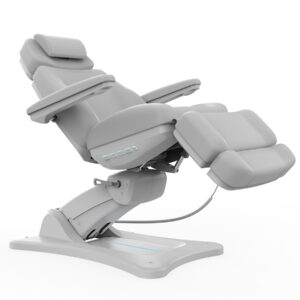
Silverfox 2246BN treatment chair
Available from Amtech Medical
Price range: $2,399.00 through $2,489.00
View 2246BN

Silverfox 2246EBN: Best Overall Premium Silverfox Facial Chair

For a practice looking for one chair capable of supporting a very broad treatment menu, the Silverfox 2246EBN is one of the strongest overall options in the Silverfox lineup.

The 2246EBN combines four powered adjustments with a rotating platform, programmable positions, reset functionality, and both hand and foot control options. The design also provides practical treatment-room features such as removable upholstery sections, adjustable patient supports, and compatibility with exam-room accessories.

The important advantage is not any one feature. It is that the 2246EBN combines many of the features a multi-service aesthetic practice is likely to want in one platform.

A practice can use the same treatment room for injectables, laser procedures, skin treatments, and conventional facial services without the chair becoming the limiting factor.

Best use: Injectables, lasers, medical aesthetics, advanced facial treatments, skin procedures, and general cosmetic treatment.

Best practice types: Premium medical spas, dermatology practices, cosmetic surgery offices, laser clinics, and multi-service aesthetic centers.

Choose the 2246EBN when: You want maximum versatility and expect the treatment room to support many different services.

Best overall premium choice: For a multi-service medical spa that wants to standardize around one chair platform, the 2246EBN is one of the safest choices because it offers broad positioning capability without being built around only one procedure type.
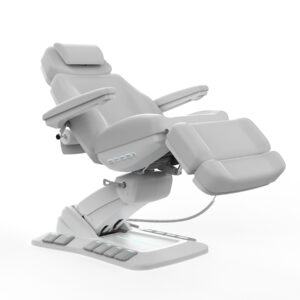
Silverfox 2246EBN treatment chair
Available from Amtech Medical
Price range: $3,984.90 through $5,255.85
View 2246EBN

Silverfox 2246EBNS: Best for Gynecology and Women’s Wellness Procedures

Despite sharing the 2246 name, the Silverfox 2246EBNS should not be evaluated as a conventional facial chair.

The EBNS configuration adapts the 2246 platform for procedures requiring gynecologic stirrups. That changes both the room setup and the type of practice for which the chair makes sense.

A traditional esthetic treatment room does not benefit from stirrups. A gynecology, women’s wellness, or physician-led practice performing procedures that require that patient position may.

Best use: Gynecologic examinations and procedures, women’s wellness services, and medical-aesthetic procedures that require stirrup positioning.

Best practice types: OB-GYN offices, women’s wellness clinics, physician practices, and appropriately equipped medical spas.

Choose the 2246EBNS when: Your procedure mix genuinely requires stirrups or gynecologic positioning.

For a medical spa that does not perform those procedures, the standard 2246BN or 2246EBN is generally the more logical choice.

Silverfox 2246EBNS treatment chair
Available from Amtech Medical
Price range: $3,984.90 through $5,255.85

Select the EBNS configuration with stirrups on the product page.

View 2246EBNS

Silverfox 2270FB: Best Facial Chair for Small Treatment Rooms

The Silverfox 2270FB is particularly interesting for practices where usable space around the provider matters.

Its single-column lifting architecture creates a relatively open working area beneath and around the chair. That can give a provider more room for a stool, cart, or treatment equipment than some broader pedestal designs.

The chair still provides four-motor electric positioning, allowing it to function as much more than a simple spa bed. That makes it useful in compact rooms that still need professional patient positioning.

Best use: Facial treatments, head-spa services, laser services, lash and brow procedures, and general medical-spa treatments in smaller rooms.

Best practice types: Medical spas, day spas, aesthetic clinics, and offices converting smaller rooms into treatment spaces.

Choose the 2270FB when: Floor space and provider clearance are major considerations.
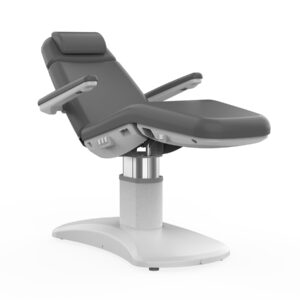
Silverfox 2270FB treatment chair
Available from Amtech Medical
Price range: $2,199.00 through $2,619.00
View 2270FB

Silverfox 2271B: Best for Comfort and Replaceable Upholstery

The Silverfox 2271B takes a somewhat different approach from models that focus primarily on provider access or equipment clearance.

Its removable cushion system makes the upholstered sections easier to clean, replace, or change without necessarily treating worn upholstery as the end of the entire chair’s useful life. That can be valuable in a high-use treatment environment where cushions eventually show wear before the underlying electric platform does.

The chair also provides powered positioning and a comfort-oriented seat-tilt range that can create a more relaxed, near-zero-gravity patient posture.

Best use: Longer aesthetic treatments, premium facials, injectables, examinations, and procedures where patient comfort matters.

Best practice types: High-end spas, medical spas, aesthetic clinics, and modern physician offices.

Choose the 2271B when: Comfort, appearance, and serviceable upholstery are major priorities.
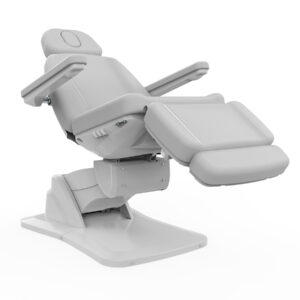
Silverfox 2271B treatment chair
Available from Amtech Medical
Price range: $2,350.00 through $2,390.00
View 2271B

Which Silverfox Facial Chair Is Best for Each Type of Practice?

The easiest way to narrow the lineup is to begin with the services you actually perform.

Best Silverfox Facial Chair for an Esthetician

For a traditional esthetician or day spa, the 2206A, 2219B, and 2221D are the most logical starting points.

  • 2206A: Best when low cost, hydraulic simplicity, and basic positioning are enough.
  • 2219B: Best when electric height and back positioning would improve workflow.
  • 2221D: Best when the room performs a broader range of services and needs more powered adjustment.

Best Silverfox Facial Chair for a Medical Spa

A general medical spa has more options because the ideal chair depends on the treatment menu.

The 2220D and 2235D make sense when the priority is efficient multi-motor positioning. The 2270FB makes sense when treatment-room space is limited. The 2271B is compelling when client comfort and replaceable cushions matter. The 2246BN and 2246EBN are the strongest candidates when the room needs maximum flexibility.

Best Silverfox Facial Chair for Botox and Fillers

The 2222BN deserves special attention for an injectables-focused practice because its tapered base provides additional space for the injector to work close to the patient’s face.

For a practice that combines injectables with lasers, facial services, or other advanced procedures, the rotating 2246BN and 2246EBN become especially attractive.

Best Silverfox Chair for Dermatology or a Physician Office

The 2218BN is one of the strongest conventional medical-oriented options because of its heavy-duty construction, broad patient capacity, Trendelenburg capability, and repeatable positioning features.

A practice that also performs a large volume of cosmetic procedures may prefer the greater rotational flexibility of the 2246 platform.

Best Silverfox Chair for a Small Treatment Room

The 2270FB is one of the strongest candidates when working clearance is limited because its single-column design leaves a relatively open area around the provider.

Best Silverfox Chair for Women’s Health Procedures

For procedures that specifically require stirrups, the 2246EBNS is the appropriate specialty configuration. A conventional facial chair should not be selected simply because it is less expensive if the intended procedure requires different patient positioning.

Quick picks by use case

  • Best budget / hydraulic option: 2206A
  • Best entry-level electric option: 2219B
  • Best mid-range multipurpose option: 2221D
  • Best general four-motor med-spa option: 2220D
  • Best for rapid repositioning: 2235D
  • Best heavy-duty medical option: 2218BN
  • Best for injectables: 2222BN
  • Best advanced rotating platform: 2246BN
  • Best overall premium option: 2246EBN
  • Best specialty gynecology configuration: 2246EBNS
  • Best for small treatment rooms: 2270FB
  • Best for comfort and replaceable upholstery: 2271B

Hydraulic vs. Electric Silverfox Facial Chairs

The choice between hydraulic and electric is primarily a question of how often the chair needs to move during the workday.

For relatively static treatments, hydraulic positioning can be completely adequate. A provider may set the patient’s height and recline at the beginning of a facial and make few changes until the service is complete.

Electric chairs become increasingly useful as the treatment menu becomes more complex.

An injector may change patient angle several times during a procedure. A laser provider may need a different working height depending on the treatment area. A room performing both facial and body services may alternate repeatedly between upright, reclined, tilted, and nearly flat positions.

In those situations, electric controls are not simply a luxury feature. They can improve provider ergonomics, reduce repetitive manual adjustments, and make it easier to reproduce a preferred treatment position from one patient to the next.

Do You Need a Four-Motor Facial Chair?

Not every practice needs one.

A four-motor facial chair is valuable when the provider routinely needs independent control over height, backrest, seat tilt, and leg position. That flexibility matters most in rooms that support multiple procedure types or where the chair is adjusted frequently throughout the appointment.

A traditional esthetician who performs primarily facials may receive little practical benefit from paying for every available powered movement. A multi-provider medical spa, on the other hand, may use those adjustments throughout the day.

Bottom line: More motors give you more positioning control, but the best chair is the one whose features match the procedures performed in the room. Do not pay for complexity your providers will never use, and do not under-specify a chair that will be repositioned constantly.

What Is the Best Silverfox Facial Chair Overall?

There is no universal winner, but several models stand out for particular buyers.

If we had to select one chair for a multi-service medical spa without knowing the exact treatment mix, the 2246EBN would be one of the safest premium choices because it combines broad powered positioning, rotation, programmable positions, provider control options, and a platform suitable for several different aesthetic services.

That does not mean every practice should automatically buy the most expensive or most heavily equipped chair.

A practice that performs nothing but facials may get everything it needs from a 2219B or 2221D. An injector may prefer the working clearance of the 2222BN. A smaller office may gain more from the compact working footprint of the 2270FB. A dermatology practice may prioritize the heavier-duty 2218BN.

The best treatment chair is ultimately the one that fits the procedures performed in the room.


Silverfox Facial Chair FAQs

What is the best Silverfox facial chair for a med spa?

For a multi-service medical spa, the 2246EBN is one of the strongest overall premium choices because it combines broad electric positioning, rotation, programmable positions, and multiple control options. Practices with simpler treatment menus may be better served by the 2220D, 2235D, or 2270FB.

Which Silverfox facial chair is best for Botox and fillers?

The 2222BN is especially well suited to injectables because its tapered base gives the provider more room to work close to the patient’s head and face. The 2246BN and 2246EBN are premium alternatives for practices that also need rotational access and broader multi-procedure capability.

Which Silverfox chair is best for an esthetician?

The 2206A, 2219B, and 2221D are generally the strongest starting points. The 2206A is an economical hydraulic option, the 2219B adds convenient electric positioning, and the 2221D provides additional powered adjustments for a broader treatment menu.

What is the difference between the Silverfox 2246BN and 2246EBN?

Both belong to Silverfox’s advanced 2246 treatment-chair family. The 2246BN provides the core rotating, multi-motor platform, while the 2246EBN is the more fully equipped configuration with a broader convenience and control package for medical-aesthetic and high-end spa environments.

Does a medical spa need a four-motor treatment chair?

Not necessarily. A four-motor chair becomes most useful when providers routinely adjust height, backrest, seat angle, and leg position during different procedures. A spa performing relatively simple facial services may be well served by a less complex chair.

Which Silverfox facial chair is best for a small treatment room?

The 2270FB is one of the strongest choices for a smaller room because its single-column design creates useful working clearance while retaining four-motor positioning.

Which Silverfox chair is best for a dermatology office?

The 2218BN is a strong option when the priorities are heavy-duty construction, patient capacity, Trendelenburg capability, and medical-oriented positioning. Practices performing a larger volume of cosmetic procedures may also consider the 2246BN or 2246EBN.

Can one Silverfox chair be used for both facials and injectables?

Yes. Several models are versatile enough to support both, particularly the 2220D, 2235D, 2246BN, 2246EBN, 2270FB, and 2271B. The best choice depends on how important close provider access, rotation, room size, and powered positioning are to your workflow.

Choosing a Silverfox Treatment Chair for Your Practice

Silverfox model numbers do not immediately explain how dramatically the chairs differ in real-world use.

The 2206A is not simply a cheaper 2246EBN. It is a fundamentally different solution for a practice with simpler positioning requirements.

Likewise, the 2222BN is not just another electric facial chair. Its tapered base gives injectors a specific ergonomic advantage. The 2218BN emphasizes heavy-duty medical use. The 2270FB prioritizes working clearance in a compact footprint. The 2271B emphasizes patient comfort and serviceable upholstery. The 2246EBN combines the broadest collection of premium features for a multi-service aesthetic room.

That is why the best Silverfox facial chair should be selected according to the treatments performed, available room size, patient population, and the way providers prefer to work.

Need Help Choosing a Silverfox Facial Chair?

Amtech Medical offers Silverfox treatment chairs for esthetic, medical-spa, and clinical environments. If you are comparing models and are unsure which chair best fits your procedures, treatment-room layout, or budget, our team can help you narrow the options.

Contact Amtech Medical ย  Browse Esthetician Beds

Product note: Available colors, control packages, accessories, and model revisions can change. Confirm current configuration details before ordering.

How to Clean a Steam Sterilizer Properly: Step-by-Step Autoclave Cleaning Guide

how to clean a steam sterilizer

Steam sterilizers, including autoclaves, rely on clean internal chambers and components to operate effectively. Without regular cleaning, mineral buildup, debris, and biological residue can interfere with sterilization cycles and damage internal components. Proper cleaning helps ensure consistent sterilization and prevents costly repairs.

Why Cleaning a Steam Sterilizer Is Important

Key takeaway: Steam sterilizers operate using high-temperature pressurized steam. Over time, contaminants can accumulate inside the chamber and plumbing systemโ€”reducing performance and increasing the risk of failures.

Steam sterilizers operate using high-temperature pressurized steam. Over time, contaminants accumulate inside the chamber and plumbing system.

Common buildup includes

  • Mineral deposits from water
  • Biological residue
  • Dust and debris
  • Rust and corrosion particles

This buildup can cause

  • Incomplete sterilization
  • Cycle failures
  • Chamber damage
  • Sensor malfunctions
  • Reduced equipment lifespan

Routine cleaning helps prevent these issues and keeps sterilization performance consistent.

How Often Should You Clean a Steam Sterilizer?

Steam sterilizers require cleaning at multiple intervals. Use the schedule below as a baseline and adjust based on usage and your manufacturerโ€™s recommendations.

Daily Cleaning
  • Wipe chamber interior
  • Clean door gasket
  • Remove visible debris
Weekly Cleaning
  • Clean trays and racks
  • Wipe chamber thoroughly
  • Inspect chamber surfaces
Monthly Cleaning
  • Perform full chamber cleaning
  • Check drain screen
  • Inspect water reservoir
As Needed
  • Remove mineral deposits
  • Clean after heavy usage

Important: Always follow manufacturer cleaning instructions, approved chemicals, and water-quality guidelines for your specific sterilizer model.


Step-by-Step Guide: How to Clean a Steam Sterilizer

Follow these steps to safely clean your autoclave and help maintain consistent sterilization performance.

Safety first: Use only manufacturer-approved cleaning agents and tools. Avoid harsh chemicals that can damage seals, sensors, and stainless surfaces.

1

Turn Off and Cool the Sterilizer

Before cleaning, make sure the unit is fully shut down and safe to handle:

  • Turn off the sterilizer
  • Allow it to cool completely
  • Disconnect power if required
Never clean a hot sterilizer.
2

Remove Trays and Internal Components

Remove and set aside:

  • Instrument trays
  • Tray racks
  • Internal removable parts

Clean these components separately using:

Mild detergent
Helps lift residue without damaging finishes.
Soft cloth or sponge
Prevents scratches and surface wear.
Avoid abrasive materials (e.g., scouring pads) that can scratch stainless steel and create areas where residue can cling.
3

Clean the Sterilizer Chamber

Using a soft cloth, gently clean the chamber interior:

  • Wipe chamber interior surfaces
  • Remove residue and buildup
  • Focus on corners and drain areas
Use only manufacturer-approved cleaners.
Approved products reduce the risk of damaging stainless steel and internal sensors.
Avoid bleach or harsh chemicals.
These can corrode metal surfaces and degrade seals over time.
4

Clean the Door Gasket

The door gasket is critical for maintaining pressure. Carefully:

  • Wipe the gasket with a damp cloth
  • Remove debris along the seal surface
  • Inspect for cracks or wear
Replace when needed: Damaged gaskets should be replaced to prevent pressure loss, cycle errors, and incomplete sterilization.
5

Clean the Drain Screen

The drain screen collects debris and plays a critical role in proper water flow.

Remove and clean:

  • Rinse with clean water
  • Remove visible buildup
  • Reinstall properly
Clogged drains can cause sterilization failures and improper pressure regulation during cycles.
6

Clean the Water Reservoir (If Applicable)

If your sterilizer includes a water reservoir, it must be cleaned regularly to prevent contamination and mineral buildup.

  • Drain existing water
  • Clean the reservoir interior
  • Refill with distilled water only
Never use tap water unless explicitly approved. Minerals in tap water can cause scaling, sensor issues, and long-term damage.
7

Reassemble and Test the Sterilizer

After cleaning, reassemble all components and verify proper operation:

  • Reinstall trays and internal components
  • Close the door securely
  • Run an empty cycle
Final check: Running a test cycle confirms proper operation and ensures the sterilizer is ready for safe clinical use.

What Cleaning Products Are Safe for Steam Sterilizers?

Using the correct cleaning products is essential to protect your sterilizerโ€™s chamber, seals, and internal components. Always use manufacturer-approved materials whenever possible.

Safe options include

  • Mild neutral detergents
  • Manufacturer-approved cleaners
  • Distilled water

Avoid

  • Bleach
  • Abrasive cleaners
  • Steel wool
  • Acidic cleaners

Important: Harsh or abrasive cleaning products can damage the chamber surface, degrade seals, and lead to premature equipment failure.

Common Steam Sterilizer Cleaning Mistakes

Even with good intentions, improper cleaning practices can lead to serious performance issues and costly repairs.

Using tap water instead of distilled water
Using harsh chemicals
Skipping regular cleaning
Ignoring drain maintenance
Cleaning while the sterilizer is hot

Why this matters: These mistakes can cause permanent damage, reduce sterilization effectiveness, and significantly shorten the lifespan of your equipment.

Signs Your Steam Sterilizer Needs Cleaning

If your sterilizer is not performing as expected, it may be due to internal buildup or poor maintenance.

Cycle failures
Visible chamber buildup
Unusual odors
Longer cycle times
Error messages

Pro tip: Regular cleaning helps prevent these issues before they impact performance, ensuring reliable sterilization and reducing downtime.

Professional Steam Sterilizer Maintenance

In addition to routine cleaning, steam sterilizers require professional service to maintain safe and reliable operation.

Annual maintenance helps identify wear, calibration drift, and hidden issues before they lead to downtime or failed sterilization cycles.

Chamber inspection
Valve inspection
Sensor calibration
Pressure testing
Full system inspection
Result: Professional servicing ensures safe operation, compliance, and long-term equipment reliability.

Steam Sterilizer Models That Require Regular Cleaning

Routine cleaning is required for all steam sterilizers, regardless of brand or configuration.

Tuttnauer autoclaves
Midmark autoclaves
Statim sterilizers
Tabletop steam sterilizers
Medical and laboratory autoclaves
Bottom line: All sterilizers require routine cleaning to maintain performance and prevent failures.

Final Thoughts: How to Clean a Steam Sterilizer Safely

Proper cleaning ensures reliable sterilization, prevents equipment damage, and extends the lifespan of your sterilizer.

By following a regular cleaning schedule and using approved cleaning methods, your steam sterilizer will operate safely and efficiently for years.

Key takeaway: Routine cleaning is one of the most important steps in sterilizer maintenance and long-term performance.

Steam Sterilizer Cleaning FAQs

How often should a steam sterilizer be cleaned?
Daily light cleaning and weekly chamber cleaning are recommended, with deeper cleaning performed monthly.
Can you use bleach to clean a steam sterilizer?
No. Bleach can damage the sterilizer chamber and internal components.
What water should be used in a steam sterilizer?
Distilled water is recommended to prevent mineral buildup and internal scaling.
Why is my steam sterilizer failing cycles?
Common causes include chamber buildup, clogged drains, or lack of routine cleaning and maintenance.

References and Additional Resources

Can You Sit at a Saddle Stool All Day? Ergonomic Benefits, Risks, and Best Practices

can you sit at a saddle stool all dayโ€‹

Quick Answer: Can You Sit at a Saddle Stool All Day?

Yes, saddle stools are specifically designed for extended sitting and can be safely used throughout a full workday when properly adjusted. Unlike traditional office chairs, saddle stools position the body in a natural, upright posture that reduces spinal strain, improves circulation, and promotes better ergonomic alignment.

Saddle stools are widely used in medical clinics, laboratories, dental offices, and dermatology practices where professionals routinely sit for long periods. When used correctly, they can significantly reduce fatigue and improve comfort compared to conventional seating.

Understanding How Saddle Stools Support Full-Day Sitting

The human body is not naturally designed to sit for prolonged periods in the traditional 90-degree seated position found in most office chairs. This position forces the pelvis to tilt backward, flattens the natural lumbar curve, and increases pressure on spinal discs. Over time, this can contribute to lower back pain, muscle fatigue, and poor posture.

Saddle stools address this problem by positioning the user in a semi-standing posture. The hips remain open at an angle of approximately 120 to 135 degrees, which allows the spine to maintain its natural curvature. This posture distributes body weight more evenly and reduces stress on the lower back.

This biomechanically neutral position is one of the primary reasons saddle stools are trusted by medical professionals, surgeons, laboratory technicians, and clinicians who must remain seated for extended periods while maintaining precision and focus.

Key Ergonomic Advantages of Saddle Stools

  • Maintains natural spinal curvature โ€“ Reduces stress on vertebral discs and prevents slouching
  • Reduces lower back compression โ€“ Open hip angle decreases pressure on lumbar structures
  • Improves core muscle engagement โ€“ Strengthens stabilizing muscles over time
  • Promotes better circulation โ€“ Reduces vascular compression in the hips and legs
  • Encourages active sitting posture โ€“ Prevents passive slouching associated with fatigue
  • Improves mobility and positioning โ€“ Allows easier movement during detailed tasks

Why Medical and Laboratory Professionals Use Saddle Stools All Day

Saddle stools are commonly used in environments where professionals must maintain precise positioning while working for long periods. In dermatology clinics, practitioners often lean forward during procedures. Traditional chairs can cause spinal rounding and muscle fatigue, while saddle stools support proper posture throughout the procedure.

Similarly, laboratory technicians working at microscopes or performing slide preparation benefit from the improved alignment provided by saddle stools. The upright posture reduces strain on the neck, shoulders, and lower back.

Dentists, surgeons, and medical assistants also rely on saddle stools because they allow both stability and mobility, which improves efficiency and reduces physical fatigue during long clinical sessions.

Comparison: Saddle Stool vs Traditional Office Chair

Feature Saddle Stool Traditional Chair
Spinal Alignment Maintains natural posture Often causes slouching
Lower Back Pressure Reduced Increased
Circulation Improved Restricted
Mobility High Limited

Adjustment Period and What to Expect

Some users experience mild muscle fatigue when first switching to a saddle stool. This occurs because saddle stools activate stabilizing muscles that are underutilized when sitting in traditional chairs. This is a normal and temporary adjustment process.

Most users fully adapt within one to two weeks, after which comfort typically improves significantly compared to traditional seating.

Best Practices for Sitting on a Saddle Stool All Day

  • Adjust height so hips are slightly higher than knees
  • Keep feet flat on the floor
  • Maintain upright posture without slouching
  • Keep shoulders relaxed
  • Take standing breaks every 30 to 60 minutes
  • Allow time for muscles to adapt

Final Verdict: Are Saddle Stools Suitable for Full Workdays?

Saddle stools are one of the most ergonomically beneficial seating solutions available for professionals who sit for extended periods. Their design promotes proper posture, reduces spinal strain, and improves overall comfort compared to traditional seating. With proper adjustment and regular movement, saddle stools can be safely and comfortably used throughout a full workday.

Recommended Saddle Stool for Clinical and Laboratory Use

Choosing a high-quality saddle stool is essential for achieving the ergonomic benefits described above. Professional-grade saddle stools are designed with proper height adjustment ranges, stable bases, and supportive seat contours to ensure long-term comfort and durability in medical and laboratory environments.

The saddle stool available from Amtech Medical is specifically selected for clinical reliability, ergonomic performance, and daily professional use. It is suitable for dermatology clinics, histology laboratories, medical offices, and other professional environments where proper posture and mobility are critical.

Key Features:
  • Ergonomic saddle seat design for proper spinal alignment
  • Smooth height adjustment for precise positioning
  • Stable rolling base for easy mobility
  • Durable construction designed for clinical environments
  • Suitable for full-day professional use
View Saddle Stool at Amtech Medical โ†’

This saddle stool is designed for medical professionals, laboratory technicians, and clinical environments requiring extended sitting and ergonomic support.

Facial With High Frequency: Benefits, Process, and Professional Uses

Facial With High Frequency Benefits, Safety, and Treatment Guide

A facial with high frequency is a professional skincare treatment that uses a low-level electrical current to support skin purification, circulation, and post-extraction calming. High frequency has been used in professional esthetics for decades and remains a staple in treatment rooms due to its versatility and non-invasive nature.

This modality is commonly incorporated into facials targeting acne-prone skin, congested pores, and uneven texture, as well as general skin conditioning treatments.


How a Facial With High Frequency Works

High frequency devices generate a mild electrical current that is delivered through glass electrodes filled with inert gas, typically argon or neon. When applied to the skin, this current produces gentle warmth and a subtle oxygenating effect at the surface level.

During a facial with high frequency, the treatment is typically applied:

  • After cleansing and exfoliation
  • Following extractions to calm and purify the skin
  • Before masks or finishing products

The process is painless and designed for professional, controlled use in esthetic settings.


Benefits of a Facial With High Frequency

A facial with high frequency offers several skin-supporting benefits when used correctly.

Common benefits include:

  • Helping reduce the appearance of acne-causing bacteria
  • Supporting post-extraction calming
  • Encouraging circulation and oxygenation at the skinโ€™s surface
  • Assisting with congestion and oily skin conditions
  • Promoting an overall refreshed skin appearance

Because the treatment is non-abrasive, it is often suitable for repeat professional use as part of a regular skincare routine.


Who Is a Facial With High Frequency Best For?

A facial with high frequency is commonly recommended for:

  • Acne-prone or congested skin
  • Oily or combination skin types
  • Clients experiencing frequent breakouts
  • Post-extraction care during professional facials
  • Clients seeking non-invasive skin treatments

While beneficial for many skin types, treatment suitability should always be determined by a trained skincare professional.


Safety Considerations for High Frequency Facials

Proper technique and safety awareness are essential when performing a facial with high frequency.

General safety guidelines include:

  • Use only on intact, healthy skin
  • Avoid use on clients with pacemakers or certain medical conditions
  • Ensure electrodes are fully dry before activation
  • Follow manufacturer instructions for duration and intensity
  • Perform treatments only by trained professionals

High frequency treatments are considered safe when used appropriately and within professional guidelines.


How High Frequency Fits Into a Professional Facial Treatment

A facial with high frequency is typically one step within a complete professional facial, not a standalone procedure. It is often combined with:

  • Cleansing and exfoliation
  • Steam and extractions
  • Masks and serums
  • Moisturizing and sun protection

This makes high frequency a flexible tool that can be adapted to a wide range of treatment goals.


Final Thoughts on a Facial With High Frequency

A facial with high frequency remains a trusted and effective option in professional skincare due to its versatility, gentle application, and supportive skin benefits. When performed correctly, it complements traditional facial techniques and enhances overall treatment outcomes without adding significant time or discomfort.

As with any professional modality, results depend on proper technique, client selection, and consistent application as part of a broader skincare program.


FAQ

Is a facial with high frequency painful?

No. Most clients experience only mild warmth or a light tingling sensation.

How often can you get a facial with high frequency?

Frequency depends on skin type and treatment goals, but it is commonly included in regular professional facial schedules.

Can high frequency be used on sensitive skin?

In many cases yes, but treatment settings and duration should be adjusted by a trained professional.


References & Further Reading

  • National Institute of Arthritis and Musculoskeletal and Skin Diseases (NIAMS) โ€“ Skin Health Basics
    Educational resource on skin structure, function, and general skin health principles.
    https://www.niams.nih.gov/health-topics/skin-diseases
  • American Academy of Dermatology (AAD) โ€“ Acne and Professional Skin Treatments
    Clinical perspective on acne management and professional skin care practices.
    https://www.aad.org/public/diseases/acne
  • Milady Standard Esthetics Textbook โ€“ High Frequency Treatment Overview
    Industry-standard esthetics education covering high frequency use, benefits, and safety.
    https://www.milady.com
  • National Center for Biotechnology Information (NCBI) โ€“ Skin Physiology & Electrical Modalities
    Peer-reviewed research related to skin physiology and electrical stimulation concepts.
    https://www.ncbi.nlm.nih.gov
  • FDA โ€“ General Wellness & Cosmetic Device Guidance
    Regulatory context for cosmetic and wellness devices used in professional settings.
    https://www.fda.gov/medical-devices

Red Light Therapy FAQs: Safety, Results, and Common Questions Answered

Red Light Therapy FAQs: Safety, Results, and Common Questions Answered

Red light therapy has become increasingly popular for skin health, recovery, pain relief, and wellnessโ€”but with that popularity comes a lot of questions. People often want clear, honest answers before using it, especially when it involves pregnancy, cosmetic treatments, or skincare products.

This FAQ-style guide answers the most common red light therapy questions, including safety concerns, effectiveness, and what it can (and cannot) do.


Does Red Light Therapy Tan You?

No, red light therapy does not tan your skin.

Red light therapy uses red and near-infrared wavelengths, not ultraviolet (UV) radiation. Tanning occurs when UV rays stimulate melanin production in the skin. Red light therapy does not trigger this response.

Because there is no UV exposure:

  • It does not cause tanning
  • It does not darken skin tone
  • It does not increase sun damage risk

This makes red light therapy fundamentally different from tanning beds or sun exposure.


Does Red Light Therapy Work Through Clothes?

Red light therapy does not work effectively through clothing.

For best results, the light needs direct contact with bare skin. Clothing blocks or significantly reduces the amount of light that reaches the tissue.

Thin fabrics may allow some light penetration, but results are inconsistent. For therapeutic benefit:

  • Skin should be uncovered
  • The device should be positioned close to the treatment area
  • Sessions should follow manufacturer guidelines

Is Red Light Therapy Safe for Pregnancy?

This is a common and important question.

While red light therapy is non-invasive and non-UV, there is limited clinical research specifically evaluating its use during pregnancy. Because of this:

  • Red light therapy is generally considered low risk
  • However, pregnant individuals should consult a healthcare provider before use
  • Devices should never be used directly over the abdomen without medical guidance

Most providers recommend erring on the side of caution unless a clinician approves its use for a specific indication.


Can You Use Red Light Therapy After Botox?

Yes, red light therapy is commonly used after Botox, but timing matters.

Red light therapy is often used post-procedure because it may:

  • Reduce inflammation
  • Support skin recovery
  • Help minimize bruising

General recommendations include:

  • Waiting 24โ€“48 hours after Botox injections
  • Avoiding direct pressure on treated areas
  • Following guidance from your injector or provider

Used correctly, red light therapy can complement post-Botox care rather than interfere with results.


Does Red Light Therapy Help With Bruises?

Yes, red light therapy is often used to help bruises heal faster.

Red light therapy may support bruise recovery by:

  • Increasing circulation
  • Supporting cellular repair
  • Reducing inflammation

It is commonly used after:

  • Cosmetic injections
  • Minor injuries
  • Surgical procedures

While results vary, many users report faster fading and reduced tenderness when red light therapy is applied consistently.


Does Red Light Therapy Work for Weight Loss?

Red light therapy is not a weight loss solution on its own.

Some studies suggest red light therapy may:

  • Support fat cell metabolism
  • Be used as an adjunct to body contouring treatments

However:

  • It does not replace diet or exercise
  • It does not cause significant weight loss by itself
  • Results, when seen, are modest and localized

Red light therapy should be viewed as a supportive wellness or body-contouring tool, not a primary weight loss method.


Can You Use Tretinoin and Red Light Therapy Together?

Yes, but caution is important.

Tretinoin increases skin sensitivity, which can make the skin more reactive to light exposure. When combining tretinoin and red light therapy:

  • Avoid using red light therapy immediately after applying tretinoin
  • Consider using red light therapy earlier in the day and tretinoin at night
  • Monitor skin for irritation or redness
  • Reduce session length if sensitivity occurs

Many people successfully use both together, but adjustments may be necessary depending on skin tolerance.


Is Red Light Therapy Safe Overall?

When used correctly, red light therapy is generally considered safe and well-tolerated.

Key safety points include:

  • Use FDA-cleared or medical-grade devices when possible
  • Follow manufacturer instructions
  • Avoid overuse
  • Use eye protection when recommended

As with any therapeutic technology, individual conditions and sensitivities matter.


Final Thoughts

Red light therapy offers a wide range of potential benefits, but itโ€™s not magicโ€”and itโ€™s not one-size-fits-all. Understanding what it can and canโ€™t do helps you use it safely and effectively.

If youโ€™re considering red light therapy for skin health, recovery, or wellness, the best results come from:

  • Using quality equipment
  • Following proper usage guidelines
  • Consulting healthcare professionals when needed

Informed use is always the safest use.

ConMed Hyfrecator 2000 Service Manual (Download Info, Contents, and Service Options)

ConMed Hyfrecator 2000 Service Manual

Download Conmed Hyfrecator 2000 service manual here


If youโ€™re searching for the ConMed Hyfrecator 2000 service manual, youโ€™re likely trying to download it to troubleshoot, maintain, or repair a Hyfrecator 2000 electrosurgical unit. This is a very common search among clinics, hospitals, and biomedical staff.

This page explains:

  • Where and how the ConMed Hyfrecator 2000 service manual is typically accessed
  • What the service manual contains
  • Why it may not be publicly available
  • What your options are if you need service, inspection, or repair

Can You Download the ConMed Hyfrecator 2000 Service Manual?

The ConMed Hyfrecator 2000 service manual is a technician-level document intended for trained biomedical professionals. Unlike operator or user manuals, service manuals often include:

  • Internal schematics
  • Calibration procedures
  • Electrical test points
  • Output verification steps
  • Safety and leakage testing requirements

Because of this, the service manual is not always publicly distributed online and may only be available through:

  • The manufacturer (ConMed)
  • Authorized service providers
  • Certified biomedical technicians

If youโ€™re unable to locate a public download, this is normal and expected for electrosurgical equipment.


Whatโ€™s Inside the ConMed Hyfrecator 2000 Service Manual?

While the full service manual itself is restricted, it typically includes sections covering:

Equipment Overview

  • Device architecture and internal components
  • Operating modes and output characteristics

Calibration & Performance Testing

  • Output power verification
  • Frequency and waveform checks
  • Calibration tolerances

Electrical Safety Testing

  • Ground integrity
  • Leakage current testing
  • Compliance with medical electrical standards

Troubleshooting & Diagnostics

  • Common fault conditions
  • Symptom-based diagnostics
  • Verification steps after repair

Preventive Maintenance

  • Recommended inspection intervals
  • Wear items and service checkpoints
  • Functional testing procedures

These procedures require specialized tools, training, and test equipment, which is why clinics are typically advised not to perform internal servicing themselves.


Service Manual vs Operator Manual: Whatโ€™s the Difference?

Many users confuse the operator manual with the service manual.

Operator Manual

  • Intended for clinical users
  • Covers setup, use, and basic care
  • Often publicly available

Service Manual

  • Intended for trained technicians
  • Covers internal adjustments and repairs
  • Usually restricted

If youโ€™re looking for the service manual because the unit is malfunctioning, calibration is overdue, or safety testing is required, professional service is often the safest and fastest solution.


When You Need Service Instead of the Manual

Clinics often search for the ConMed Hyfrecator 2000 service manual when experiencing issues such as:

  • Inconsistent output
  • Unit not powering on
  • Footswitch or handpiece problems
  • Failed electrical safety tests
  • Overdue preventive maintenance
Contact

In these cases, attempting internal repair without proper training can:

  • Void manufacturer support
  • Create safety risks
  • Lead to compliance issues

ConMed Hyfrecator 2000 Service & Repair Options

If you need inspection, maintenance, or repair for a Hyfrecator 2000, working with an experienced medical equipment service provider is often the most practical option.

Amtech Medical provides professional service support for the ConMed Hyfrecator 2000, including:

  • Preventive maintenance
  • Performance verification
  • Electrical safety testing
  • Troubleshooting and repair
  • Post-service documentation

This allows clinics to stay compliant without needing direct access to restricted service documentation.


Why Clinics Work with Amtech Medical

Amtech Medical specializes in servicing clinical-grade medical and surgical equipment. That means:

  • Experience with electrosurgical units
  • Proper test equipment and procedures
  • Compliance-ready service documentation
  • Reduced downtime for clinical staff
  • Clear communication and support

If youโ€™re searching for the ConMed Hyfrecator 2000 service manual, chances are you need service โ€” and thatโ€™s exactly where Amtech Medical can help.


How to Get Help with Your ConMed Hyfrecator 2000

If you need service, inspection, or repair support for your Hyfrecator 2000, you can contact Amtech Medical directly.

๐Ÿ“ง Email: info@amtechmedical.com
๐Ÿ“ž Or use the contact form

Include:

  • Device model (ConMed Hyfrecator 2000)
  • Issue or service need
  • Facility location

Final Thoughts

Searching for the ConMed Hyfrecator 2000 service manual is completely understandable โ€” but access to the manual isnโ€™t always necessary to resolve equipment issues safely.

Whether youโ€™re trying to verify performance, address a malfunction, or stay compliant, working with a qualified service provider ensures your equipment remains safe, functional, and ready for clinical use.

If you need help with a ConMed Hyfrecator 2000, Amtech Medical is ready to assist.

Biomedical Equipment Service & Repair: Professional Support You Can Rely On from Amtech Medical

biomedical equipment service

Biomedical equipment service and biomedical equipment repair are mission-critical for healthcare facilities. When equipment fails, accuracy suffers, procedures are delayed, and patient safety can be put at risk. Thatโ€™s why choosing the right service partner matters.

Amtech Medical provides professional biomedical equipment service and repair for hospitals, clinics, laboratories, and specialty practices nationwide. We help healthcare organizations reduce downtime, maintain compliance, and keep critical equipment operating safely and reliably.

If your facility depends on biomedical equipment, Amtech Medical is built to support it.

Contact

Biomedical Equipment Service That Keeps Your Facility Running

Biomedical equipment service is about prevention, performance, and compliance. Routine service ensures equipment operates within manufacturer specifications and reduces the likelihood of unexpected failures.

Amtech Medicalโ€™s biomedical equipment service includes:

  • Preventive maintenance (PM)
  • Calibration and performance testing
  • Electrical and mechanical safety inspections
  • Functional verification
  • Detailed service documentation for audits and accreditation

Our service programs are designed to extend equipment lifespan, reduce emergency repairs, and improve operational uptime.


Biomedical Equipment Repair When It Matters Most

When equipment fails, you need fast, accurate, and compliant repair โ€” not guesswork.

Biomedical equipment repair from Amtech Medical focuses on:

  • Rapid diagnostics and troubleshooting
  • Replacement of failed or worn components
  • Manufacturer-aligned repair procedures
  • Post-repair calibration and validation
  • Safety testing before return to service

We donโ€™t just get equipment working again โ€” we make sure itโ€™s safe, accurate, and ready for clinical use.


One Partner for Biomedical Equipment Service & Repair

Many facilities juggle multiple vendors for maintenance and repair. That leads to inconsistent records, longer downtime, and higher costs.

Amtech Medical provides both biomedical equipment service and biomedical equipment repair under one trusted provider, simplifying vendor management and improving accountability.

Benefits of a Single Service Partner:

  • Consistent service standards
  • Centralized documentation
  • Faster response times
  • Predictable maintenance schedules
  • Lower long-term service costs

Biomedical Equipment We Service and Repair

Amtech Medical supports a wide range of biomedical and clinical equipment, including:

  • Hospital and clinical equipment
  • Surgical and procedural support devices
  • Dermatology and aesthetic systems
  • Histology and pathology instruments
  • Laboratory equipment
  • Phototherapy and light-based devices
  • Medical filtration and evacuation systems

If your equipment is essential to patient care or daily operations, Amtech Medical can support it.

Contact

Biomedical Equipment Service for Hospitals, Clinics, and Labs

Healthcare environments donโ€™t stop โ€” and neither can your equipment.

Amtech Medical provides biomedical equipment service and repair for:

  • Hospitals and health systems
  • Outpatient clinics
  • Surgical centers
  • Dermatology practices
  • Pathology and histology labs
  • Specialty medical facilities

We understand the urgency, compliance requirements, and documentation standards healthcare facilities depend on.


What Makes Amtech Medical Different?

Not all biomedical equipment service companies operate at the same level. Amtech Medical is built around reliability, transparency, and long-term partnerships.

Why Facilities Choose Amtech Medical:

  • Experienced biomedical service technicians
  • Preventive maintenance and repair expertise
  • Compliance-ready service documentation
  • Clear communication and honest assessments
  • Flexible service plans
  • Focus on uptime and patient safety

We donโ€™t just fix equipment โ€” we help facilities operate better.


When to Schedule Biomedical Equipment Service or Repair

You should contact Amtech Medical if:

  • Equipment fails calibration or safety checks
  • Performance becomes inconsistent
  • Error messages or alarms appear
  • Preventive maintenance is overdue
  • Equipment downtime is impacting workflows

Early service and repair prevent small issues from becoming costly failures.


Partner with Amtech Medical for Biomedical Equipment Service & Repair

If your facility needs reliable biomedical equipment service or expert biomedical equipment repair, Amtech Medical is ready to help.

๐Ÿ“ž Contact Amtech Medical today to:

  • Schedule biomedical equipment service
  • Request a repair
  • Set up a preventive maintenance program
  • Discuss long-term service support options

When your equipment matters, your service provider should too.
Trust Amtech Medical to keep your biomedical equipment working when it counts.


Frequently Asked Questions

Do you offer preventive maintenance programs?

Yes. Amtech Medical provides customized biomedical equipment service plans based on your facility and equipment inventory.

Do you service hospitals and private practices?

Yes. We support hospitals, clinics, laboratories, and specialty practices nationwide.

Is documentation provided after service or repair?

Absolutely. Detailed service reports are provided for compliance, audits, and internal records.

Do you provide emergency repair services?

Yes. We prioritize urgent biomedical equipment repair needs to minimize downtime.

Contact

Additional Resources & Compliance References

Medical Equipment Repair: Expert Service, Maintenance, and Support from Amtech Medical

medical equipment repair

Medical equipment repair is not just about fixing whatโ€™s broken โ€” itโ€™s about protecting patient safety, minimizing downtime, and ensuring your facility stays compliant and operational. When critical devices fail, you need a trusted partner who understands the urgency, complexity, and regulatory requirements of medical equipment servicing.

Amtech Medical provides professional medical equipment repair and maintenance services nationwide, supporting hospitals, clinics, laboratories, dermatology practices, and specialty healthcare facilities.

This guide explains how medical equipment repair works, why preventive maintenance matters, and why Amtech Medical is the trusted choice for reliable, compliant service.

Contact

What Is Medical Equipment Repair?

Medical equipment repair is the process of diagnosing, restoring, and validating medical devices that are malfunctioning, damaged, or operating outside manufacturer specifications.

This includes:

  • Electrical and mechanical troubleshooting
  • Replacement of worn or failed components
  • Calibration and performance verification
  • Safety testing and documentation
  • Functional testing before return to service

At Amtech Medical, repairs are performed by experienced, professionally trained technicians who follow manufacturer guidelines and healthcare compliance standards.


Why Medical Equipment Maintenance Is Just as Important as Repair

While repair addresses failures, medical equipment maintenance prevents them.

Preventive maintenance programs are designed to:

  • Extend equipment lifespan
  • Reduce emergency breakdowns
  • Maintain accuracy and reliability
  • Support regulatory compliance
  • Lower total cost of ownership

Amtech Medical Maintenance Services Include:

  • Scheduled preventive maintenance (PM)
  • Calibration and performance testing
  • Safety inspections
  • Documentation for audits and accreditation
  • Custom service plans tailored to your equipment inventory

Facilities that invest in consistent medical equipment maintenance experience fewer disruptions and better long-term performance.


Medical Equipment Servicing vs. Medical Device Repair

These terms are often used interchangeably, but they serve different purposes.

Medical Equipment Servicing

Routine work performed to keep devices operating correctly:

  • Preventive maintenance
  • Calibration
  • Inspection
  • Software updates
  • Safety testing

Medical Device Repair

Corrective action taken after a failure occurs:

  • Diagnosing faults
  • Replacing damaged parts
  • Restoring full functionality
  • Verifying performance and safety

Amtech Medical provides both, ensuring your equipment remains compliant, reliable, and ready for clinical use.


Types of Equipment Amtech Medical Repairs

Amtech Medical specializes in servicing a wide range of medical and laboratory equipment, including:

  • Surgical and procedural equipment
  • Smoke evacuation and filtration systems
  • Dermatology and aesthetic devices
  • Histology and pathology equipment
  • Laboratory instruments
  • Phototherapy and light-based systems
  • Clinical support devices

If your equipment is critical to patient care or daily operations, Amtech Medical can support it.


Hospital Equipment Repair: Why Reliability Matters

Hospitals rely on hundreds โ€” sometimes thousands โ€” of medical devices daily. Equipment failure can cause:

  • Procedure delays
  • Patient safety risks
  • Compliance violations
  • Lost revenue

Hospital equipment repair requires speed, expertise, and documentation.
Amtech Medical understands the urgency of healthcare environments and prioritizes:

  • Rapid response times
  • Clear communication
  • Accurate service records
  • Minimal operational disruption

What to Look for in Medical Equipment Repair Companies

Not all medical equipment repair companies are equal. Choosing the wrong provider can result in repeat failures, compliance issues, or unnecessary costs.

A Qualified Repair Partner Should Offer:

  • Experienced, trained technicians
  • Manufacturer-aligned service procedures
  • Transparent pricing
  • Detailed service documentation
  • Preventive maintenance options
  • Reliable turnaround times

Amtech Medical meets all of these criteria โ€” and works as a long-term service partner, not just a one-time repair vendor.


Why Choose Amtech Medical for Medical Equipment Repair?

Amtech Medical is a trusted provider of professional medical equipment repair and maintenance services for healthcare facilities across the United States.

What Sets Amtech Medical Apart:

  • Specialized experience across medical and laboratory equipment
  • Preventive maintenance and repair under one provider
  • Clear service reports for compliance and audits
  • Flexible service plans
  • Customer-first communication and support
  • Focus on uptime, safety, and reliability

Whether you need emergency repair or ongoing maintenance, Amtech Medical delivers dependable service you can trust.


When Should You Schedule Medical Equipment Repair?

You should contact a repair provider immediately if:

  • Equipment fails self-tests or calibration checks
  • Performance becomes inconsistent
  • Error codes appear
  • Physical damage is present
  • Safety inspections fail
  • Procedures are delayed due to device issues

Delaying repair can increase damage and cost. Early intervention saves time, money, and risk.


Get Professional Medical Equipment Repair from Amtech Medical

If your facility needs medical equipment repair, servicing, or preventive maintenance, Amtech Medical is ready to help.

๐Ÿ“ž Contact Amtech Medical today to:

Contact
  • Schedule a repair
  • Request a maintenance plan
  • Get expert guidance on equipment service options

Reliable equipment starts with reliable service โ€” and thatโ€™s exactly what Amtech Medical delivers.


Frequently Asked Questions (FAQ)

How long does medical equipment repair take?

Turnaround time depends on the device and issue. Amtech Medical prioritizes fast diagnostics and clear timelines.

Do you offer preventive maintenance plans?

Yes. Amtech Medical provides customized medical equipment maintenance plans tailored to your facility and equipment types.

Do you service hospitals and private practices?

Yes. Amtech Medical supports hospitals, clinics, labs, and specialty practices.

Is documentation provided after service?

Absolutely. Detailed service reports are provided for compliance, audits, and internal records.


Additional Resources & Compliance References

Common Anti-Roll Plate Cryostat Mistakes That Ruin Section Quality

anti-roll plate cryostat

Wrinkled, curled, or uneven cryosections are some of the most common frustrations in frozen sectioning. While blade condition and temperature often get the blame, one of the most overlooked causes is improper use or maintenance of the anti-roll plate cryostat assembly.

The anti-roll plate plays a critical role in controlling tissue flow during sectioning. When itโ€™s damaged, misaligned, or used incorrectly, section quality can deteriorate quickly.

Below are the most common anti-roll plate cryostat mistakes that negatively impact section quality โ€” and how to avoid them.


1. Using a Chipped or Worn Anti-Roll Plate Edge

Anti-roll plates are wear components. Over time, the glass edges can become:

  • Chipped
  • Nicked
  • Uneven
  • Rounded

Even minor damage along the edge can cause tissue to:

  • Catch during sectioning
  • Curl upward
  • Wrinkle or fold

Why this ruins sections

A damaged edge disrupts the smooth guidance of tissue away from the blade, causing inconsistent contact and poor section control.

Best practice

If your anti-roll plate cryostat has multiple usable edges, rotate it regularly and replace it once all edges show wear.


2. Incorrect Anti-Roll Plate Positioning

An anti-roll plate must be positioned precisely relative to the blade edge. Common positioning errors include:

  • Plate too far from the blade
  • Plate contacting the blade
  • Plate misaligned laterally

Why this ruins sections

Incorrect positioning changes how the tissue exits the blade, leading to:

  • Excessive compression
  • Wrinkling
  • Inconsistent section thickness

Best practice

Adjust the anti-roll plate according to manufacturer recommendations and verify alignment whenever the blade is changed.


3. Assuming Blade Issues Are Always the Cause

When section quality drops, many users immediately replace the blade โ€” even when the blade is still sharp.

Why this ruins sections

A worn or damaged anti-roll plate cryostat can produce poor sections even with a new blade, leading to unnecessary blade changes without solving the real issue.

Best practice

Inspect the anti-roll plate first when section quality declines, especially if blade changes donโ€™t improve results.


4. Improper Cleaning of the Anti-Roll Plate

Anti-roll plates, especially glass plates, can be easily damaged by:

  • Abrasive wipes
  • Harsh chemicals
  • Scraping frozen debris

Why this ruins sections

Scratches and surface damage create drag and uneven tissue guidance, which directly impacts section smoothness.

Best practice

Clean the anti-roll plate gently using non-abrasive materials and approved cleaning agents. Never scrape frozen material off the plate.


5. Using the Wrong Anti-Roll Plate for the Cryostat Model

Not all anti-roll plates are interchangeable. Using the wrong plate can result in:

  • Poor fit
  • Incorrect blade clearance
  • Inconsistent alignment

Why this ruins sections

Even slight differences in size or geometry can affect tissue control and section quality.

Best practice

Always use an anti-roll plate cryostat replacement designed specifically for your cryostat model.


6. Ignoring the Anti-Roll Plate as a Routine Maintenance Item

Many labs treat anti-roll plates as permanent components rather than consumable wear parts.

Why this ruins sections

Over time, gradual wear leads to subtle quality degradation that becomes โ€œnormalโ€ โ€” until sectioning becomes unreliable.

Best practice

Include the anti-roll plate in routine cryostat maintenance checks and replace it proactively before section quality suffers.


7. Expecting the Anti-Roll Plate to Fix Temperature Issues

While the anti-roll plate is essential, it cannot compensate for:

  • Incorrect specimen temperature
  • Improper chamber temperature
  • Poor tissue freezing

Why this ruins sections

Misattributing temperature problems to hardware leads to unnecessary adjustments and frustration.

Best practice

Ensure temperature settings are correct before adjusting or replacing the anti-roll plate cryostat components.


When to Replace an Anti-Roll Plate Cryostat Component

You should strongly consider replacement if:

  • All usable edges show wear or chipping
  • Section quality declines despite proper blade and temperature settings
  • Wrinkling persists across multiple specimens
  • The plate no longer aligns consistently

Replacing a worn anti-roll plate is often one of the simplest and most cost-effective ways to restore clean cryosectioning.


Final Thoughts

The anti-roll plate cryostat is a small component with a major impact on section quality. Many sectioning problems attributed to blades or technique are actually caused by plate wear, misalignment, or improper handling.

By understanding these common mistakes and maintaining the anti-roll plate as a consumable component, labs can:

  • Improve section consistency
  • Reduce rework
  • Save time and consumables
  • Maintain reliable frozen section results

If section quality has declined and adjustments arenโ€™t helping, the anti-roll plate is often the first place to look.

Red Light Mask for Wrinkles: What It Does, What Works, and What to Look For

Red Light Mask for Wrinkles What It Does, What Works, and What to Look For

A red light mask for wrinkles is a wearable light therapy device designed to deliver specific wavelengths of red and near-infrared light directly to the skin to support collagen production and improve the appearance of fine lines over time.

With the growing popularity of at-home aesthetic devices, red light therapy masks are now widely marketed for facial rejuvenation โ€” but not all devices work the same way, and not all claims are supported by evidence.

This guide explains how red light masks work, what benefits are supported by research, and how to evaluate whether a red light therapy mask for wrinkles is worth using.


What Is a Red Light Mask for Wrinkles?

A red light mask is a facial device that emits low-level red or near-infrared light (typically between 630 nm and 850 nm) across the skin surface.

Unlike ultraviolet light, red light does not damage skin. Instead, it penetrates the epidermis and dermis and is absorbed by mitochondria within skin cells, where it can influence cellular energy production and signaling pathways.

This cellular response is why red light therapy is used in dermatology, wound healing, and skin rejuvenation applications.


How Red Light Therapy Masks Help With Wrinkles

Wrinkles form as collagen and elastin fibers break down with age, sun exposure, and inflammation.

Red light therapy masks may help improve the appearance of wrinkles by:

  • Supporting fibroblast activity and collagen synthesis
  • Improving skin texture and elasticity
  • Reducing low-grade inflammation that accelerates aging
  • Supporting healing and skin barrier function

Results are gradual and cumulative, typically becoming visible after several weeks of consistent use.


Red Light Mask vs Other Wrinkle Treatments

TreatmentInvasivenessDowntimeRisk LevelResults
Red light maskNon-invasiveNoneLowGradual improvement
RetinoidsTopicalPossible irritationLowโ€“moderateModerate
Chemical peelsMinimally invasiveDaysModerateFaster
InjectablesInvasiveDaysโ€“weeksHigherImmediate

Red light therapy masks are best viewed as a long-term skin support tool rather than a rapid cosmetic intervention.


What Makes a Red Light Mask Effective?

Not all red light masks are equal. Effectiveness depends on:

Wavelength Accuracy

Look for devices that emit red light in the 630โ€“660 nm range and optionally near-infrared in the 810โ€“850 nm range.

Light Output

Sufficient irradiance is required to reach therapeutic levels in the skin.

Coverage

The mask should deliver uniform light across the face without large gaps or shadows.

Safety

Devices should be UV-free, have eye protection, and meet electrical safety standards.


How Often Should a Red Light Therapy Mask Be Used?

Most protocols recommend:

  • 3โ€“5 sessions per week
  • 10โ€“20 minutes per session
  • For at least 6โ€“12 weeks to see visible changes

Consistency is more important than intensity.


Is a Red Light Mask for Wrinkles Safe?

Red light therapy masks are generally considered safe when used as directed.

However:

  • Eye protection is important
  • Overuse can cause temporary redness or irritation
  • People on photosensitizing medications should consult a healthcare provider
  • It should not be used on suspicious skin lesions

Who Is a Red Light Mask Best For?

A red light therapy mask for wrinkles may be appropriate for:

  • Individuals with early signs of aging
  • Those looking for non-invasive skin support
  • People maintaining results after cosmetic procedures
  • Patients under dermatologic guidance

It is not a replacement for medical treatment of skin disease or severe photoaging.


Final Thoughts

A red light mask for wrinkles can be a useful, low-risk addition to a skincare routine when used consistently and with realistic expectations.

Understanding how these devices work, what specifications matter, and how results develop over time is essential to choosing the right system and avoiding disappointment.

If you are evaluating red light therapy masks for personal or professional use, selecting a device with proper wavelength control, safety standards, and clinical credibility is key.


Additional Resources & References